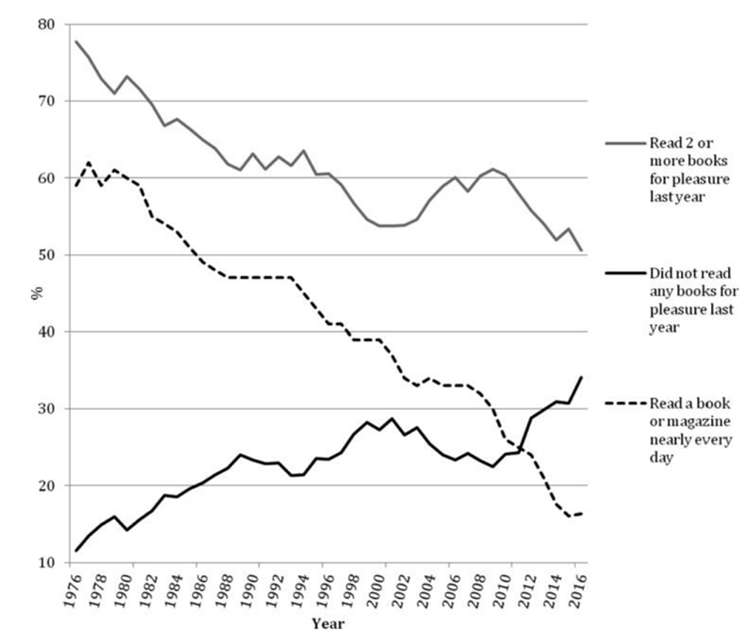
Ecology, one of the essential sub-disciplines of environmental science, is the study of connection. Communication plays an important role maintaining these connections within and across species. Whether humans or honeybees, the ability to exchange information is a group behavior with significant impact on an individual’s ability to survive and reproduce (STEELS 3.1.9-12.O). Cognitive science gives us tools to analyze the physical and functional features of animal communication, barriers to communication, and how students can overcome their own barriers to communication to better promote academic and social success.
What is cognitive science? In 2003, an inaugural encyclopedia defined it, “the scientific study of minds and brains, be they real, artificial, human or animal” (Nadel and Piatelli-Palmarini, 2003). For a layperson such as myself, this definition feels somewhat confusing. Neuroscience is the study of brains. Tools from neuroscience are sometimes useful for understanding cognition, but the two fields have developed separately since the 1950s. If not the study of brains, cognitive science is an empirical investigation of “mind.” Because it is not strictly grounded in study of the physical world, its methodological toolbox draws heavily from computer science, linguistics, and philosophy. It is philosophy to which cognitive science traces its modern roots. Although he never formally published anything about his “theory of ideas,” French philosopher René Descartes (1596 – 1650) wrote extensively across his work and correspondence about how ideas come to be and influence each other (Smith, 2007). Central to this theory was a “representational” mind that retained and acted on symbols rather than on immediate sense experience or physical stimuli. The same way a mirror contains an image of Socrates, so too did Descartes’ theory of mind retain some way to “bear” a representation of something in formal reality. One of the earliest empirical evidence for this mind was first recorded in 1868 by Franciscus Donders who attempted to illuminate the mind’s obscure decision making process by measuring reaction time (Donders, 1969). In this experiment, a subject is waiting to see a flash of light. As soon as they see the light, they are to press a button, effectively measuring how long it took for the brain to see a stimulus and respond in the body. In the comparative trial to evaluate decision-making, the subject sees one of two lights flashing, either on the left or the right. They must then push a button indicating if the left or the right light flashed. This records the time it takes to see the stimulus, identify direction, decide which indication button to press, and act. By comparing the reaction rates of both experimental trials and subtracting the first trial’s stimulus-response time, one should be left with how long it takes for the brain to identify direction and make a decision. While the average difference of ~0.125 microseconds provided objective evidence that the brain’s decision-making is a time-bound calculus, the experiment’s division of mind into discrete steps of input, process, and output would set the stage for a cognitive science that studies “the brain as computer.” This simile captures more of the field’s 20th century history and analytic approach. In the 1930s, when “computers” were still largely women performing mathematical calculations, Alan Turing outlined an idea of machine that could automatically compute any well-defined formal operation (Nadel and Piatelli-Palmarini, 2003). Two years after Turing’s “Computability” paper, Claude Shannon’s 1938 master thesis at MIT demonstrated that on-and-off electrical circuits could be used to represent and solve Boolean algebra. It was these ideas that Walter Pitts, then 18, was applying in 1942 as he attempted to model the recently discovered “all-or-nothing” electrical firing of neurons as equivalent to on-off binary circuits (Wilson, n.d.). Working with psychiatrist and computer scientist Warren McCullough, they published “A Logical Calculus of the Ideas Immanent in Nervous Activity” in 1943. A landmark paper in what was then “theoretical neurophysiology,” it provided a mathematical formal equivalence for activities happening inside the brain, including logical evaluation of propositions (McCullough and Pitts, 1943). Although the authors specifically stated their “formal equivalence” should not be mistaken for “a factual explanation” of what the neurons were doing, that was a major conceptual breakthrough in itself. The burgeoning cognitive science would be able to study “mind like” activities using symbols that were entirely separate from physical implementation in a brain. While some of McCullough and Pitts’ earliest presentations of their work was in New York through the Josiah Macy Jr. Foundation, physical computation received significant funding from the U.S. military in the midst of World War II. Researchers in this proto-cognitive science pursued self-driving vehicles, computerized vision, automated translation, document abstraction, and archival accession as well as other goals with direct benefit to global war (Nadel and Piatelli-Palmarini, 2003). As applications of computation and electrical engineering bore fruits of conquest and economy, the preeminence of computation as a ‘symbolic’ activity would supersede the early connection between neuroscience and cognitive science (Nadel, 2003). One of the two exceptions to Pitts and McCullough’s work that required simplified modeling was the concept of learning, “in which activities concurrent at some previous time have altered the net permanently” (1943). Learning requires taking information from the environment, evaluating it, storing it, and making sense of it again when applied in novel conditions. In a biological system, it is that storage and retrieval which structurally changes the brain. A simplification of this process is the adage, “neurons that fire together wire together.” Information travels through a neuron once an initial stimulus reaches an activation threshold. This causes ions to move across the cell membrane of an axon and produce electrical current toward the axon terminal. This current causes another flood of calcium ions to release neurotransmitters into the synaptic gap of the next neuron, inducing signal transmission and propagation of the message through the relevant channels (Südhof, 2012). This process induces physical changes, including growth of new synapses to connect previously disconnected neurons and existing connections on the signaling path becoming stronger as the stimulus is repeated multiple times. It is hypothesized that groups of these connections are the basis for memory formation (Ortega de San Luis, 2022). In Pitts and McCullough’s logical calculus, the actual cause of this “learning” is not addressed. Some of the earliest scientific studies on this topic were conducted by Hermann Ebbinghaus, who published his monograph, On Memory, in 1885. Attempting to gain quantitative understanding of how words are committed to memory, he created a set of nonsense syllables and repeated them in lists of varying lengths. He then measured features about what he was able to recall and identified patterns of loss and retention, including “the forgetting curve” and “spacing effect,” which have been robustly validated as effective learning techniques in the century plus since his initial discoveries (Weinstein, 2018). Another strategy for increasing effectivity of learning is “elaboration.” Admittedly a very broad definition, it “involves connecting new information to preexisting knowledge” (Weinstein, 2018). One of the ways to do this is through interrogating the reference text, specifically asking “how” and “why” of the material. Attempting to then answer these questions from existing knowledge can help learning even if someone is still new in the field. However, poor conclusions that are not then referenced to a teacher or authoritative text can be harmful to learning overall (Clinton, Alibali, & Nathan, 2016). This “contemporary” theory of using partnered inquiry and support from a teacher or textbook is old on a couple different levels. In the 1930s, Soviet psychologist Lev Vygotsky wrote in the 1930s that communication and socialization are indispensable for developing greater capacity for learning, thought, and language. An infant learns language by interacting with its caregivers. Words like addition, subtraction, and homework inform the acquisition of skills in mathematics. Innovations in science, technology, and law are built on knowledge of existing models. All this learning and sharing is received, manipulated, and stored via words and symbols from “more knowledgeable others,” whether those others be adults, peers, media, or machines (Vygotsky, 1934). Combining these two ideas of interrogative elaboration and learning from “more knowledgeable others,” the idea that “conversation partners scaffold and co-construct meanings” (Dunlosky, 2013) is very similar to a form of Torah scholarship known as chavrusa or “friend.” Cited in the Talmud compiled in 500 C.E., this basis for learning, in which two scholars alternate reading one sentence or verse from a text and discuss after each, became a widely practiced form of Jewish scholarship in 18th century Europe (Kent, 2013). What is coming up again and again in these theories of learning is directly interacting with a text and then talking about it with someone. This is increasingly rare in a contemporary classroom fraught with distraction and social anxiety, suggesting two threads worth investigating in support of greater student learning. For one, mass communication in the 20th century radically shifted the amount of time spent with text. As shown in Figure 1, the number of 12th graders in the U.S. who read two books per year decreased from nearly 80% in 1976 to just over 50% in 2016 (Twenge, Martin, & Spitzberg, 2017). Figure 1. Reading books and magazines, 12th graders, 1976 –2016. For students who struggle with reading, it is estimated that nearly one in three also struggle with an anxiety disorder, (Margari et al., 2013), this is double the anxiety rate compared with young people whose reading skills are on grade level (Carroll et al., 2005). This suggested an additional barrier when lower-level readers are expected to interact not just with the text but with peers. While the COVID-19 pandemic may have heightened reporting on social anxiety, it has been observed for a very long time. In 400 B.C.E., Hippocrates’ recounted men so shy they would not leave their homes (Penn Psychiatry, n.d.). What was then an oddity of natural history is now relatively commonplace. Among teens, a longitudinal survey conducted at Stoneybrook University found that of the 311 adolescent females in the study group, 49% experienced “clinically elevated generalized anxiety during COVID-19” (Hawes et al., 2021). In 2022, the World Health Organization reported that anxiety and depression were up 25% globally after the COVID-19 pandemic compared with pre-pandemic levels (WHO, 2022). Although online text and video communication were available to replace many in-person functions, digital interfacing has been shown to be less effective at boosting feelings of connectedness (Stieger, Lewitz, & Willinger, 2023) which are a major positive driver of mental health outcomes (Wickramaratne et al., 2022). Once social anxiety sets in, it continues to heighten perceptions of isolation. A 2007 study found that adolescents who experience higher levels of social anxiety are indeed treated more negatively by their peers (Blöte, 2007). For people with diagnosed Social Anxiety Disorder (SAD), this feedback cycle may contribute to maintaining the condition (Voncken & Dijk, 2013). Those same researchers, however, demonstrated that self-disclosure, or “how open one is about oneself to another person,” can increase likeability and thus reduce the experience of anxiety in social settings (Voncken & Dijk, 2013). So, while education in the U.S. has long been full of barriers to reading and thoughtful communication, rapid change in technology and subsequent observations in the classroom have prompted many conversations about declining quality of life, literacy, and even happiness for the young people in our schools. What do we do to increase social time with text and peers? As these goals are happening in the context of a ninth grade environmental science context, their texts and conversations must align to city, state, and national standards. A defining feature of both life and ecology is interdependence. Organisms cannot survive in isolation. In fact, evolution has produced an incredible diversity of group behaviors that influence individuals and species’ chances to survive and reproduce (Pennsylvania Department of Education, n.d.). One of those adaptive group behaviors is communication. Using the vocabulary of cognitive science, students will use Marr’s levels of analysis to study models of animal communication and compare it with their own experiences of communication as a group behavior. Originally proposed in his 1982 Vision: A Computational Approach, Marr’s three levels are a way of evaluating what a technology is and how it does it (Marr, 1982). While he uses the terms “computational, algorithmic, and implementation” to describe different aspects of information processing, ninth graders talking about animal communication will simplify this to, “what body parts does an organism use to communicate?”, “how does the communication connect to meaning?”, and “what problems are they solving with communication?” The first level is computational, what is the “problem” to be solved? For example, this level could be a technology to “perform arithmetic calculations” or, with more granularity, to “input and store a starting condition, select an arithmetic function, input additional variables, and perform the operation.” The second level is algorithmic, what steps does the technology use to achieve the goal. While an abacus and a calculator are both defined by the first level of analysis, an abacus manipulates discrete symbols of different values while a calculator uses Boolean logic like AND, OR, NOT across a stored value to represent arithmetic functions. Lastly, the third level is implementation. An abacus uses beads at the physical level while most modern calculators use an electrical signal across silicon and metal to represent the logic gates of level two. An example in animal communication might be the first level problem, “how does an owl know where sound is coming from?” The second level algorithmic process could be steps such as receive and transmit the auditory stimulus to the brain then “compare” how long it took for the signal from each ear to arrive and triangulate that the signal arriving earlier is likely closer to the source of the sound. All that would implemented across multiple structures in the third level, e.g. a brain with neurons, support cells, blood vessels, salt, metabolites, and a great deal of motor-sensory nerves conducting, experience, and responding to stimuli. Because many organisms use sound to communicate, noise pollution is one of the major disruptors to this essential function (Kunc & Schmidt, 2021). Whales have been devastated by changes in the underwater soundscape (Johnston & Painter, 2024). Ideal signal conditions for baleen whales can allow them to communicate across hundreds of miles. Before the advent of the Industrial Revolution, interruptions to these conditions might come from changes in salt concentration, wind, rain, and breaking ice. Today, U.S. Navy sonar, used in 70% of the ocean to search for submarines, can create sound waves over 230 decibels (Lange, 2016). For comparison, a human eardrum ruptures around 150 decibels. Other human sources of underwater sound pollution include shipping, fossil fuel exploration, and offshore construction (Johnston & Painter, 2024). Consequences of this noise pollution ranges from mild to extreme. Because some species of baleen whale migrate up to 20,000 km each year, disrupted communication could cause increased journey time to failed navigation. Other scientists report whales, “fleeing from sonar by swimming hundreds of miles or beaching themselves” (Lange, 2016). Although the US appeals court has declared the 2012 approval of sonar was improperly filed by National Marine Fisheries Service and violated the Marine Mammals Fisheries Act. In 2016, the ninth circuit court of appeals required stricter controls on use of the technology but had not eliminated it entirely (Associated Press, 2016). In cities, traffic sounds are the major source of urban noise pollution (Morillas et al., 2018). Compared with recordings from the 1970s, traffic increases in San Francisco caused local white-crowned sparrows to drop the lowest notes of their songs and to increase the volume to compete with the mechanical din (Derryberry et al, 2020). Reducing the bandwidth of the song patterns has been shown to decrease males birds’ ability to fend off rivals and find a mate (Luther et al., 2015). Having to sing more loudly requires more energy, and the additional stress increases the rate of aging and interrupts metabolic function (Derryberry et al, 2020). The cries of baby birds and alarm warnings are also harder to hear, potentially reducing urban bird diversity. When the COVID-19 pandemic caused massive lockdowns in early 2020, April traffic levels at the Golden Gate Bridge were reduced to the same number of cars as San Francisco in 1954 (Derryberry et al., 2020). The city became about as quiet as its more rural surroundings. City sparrows quickly took advantage of the relative silence. They did not have to “yell” just to be heard across the street. Although the recordings of male songbirds showed a significant reduction in volume, the distance at which they could be heard nearly doubled. Song complexity also returned with the quiet. It is hypothesized that changes could increase fitness from reduced metabolic output and increased successful signaling to mates and territorial competitors. For humans, physical impediments like noise pollution, e.g. a rowdy classroom, may disrupt communication, but this is not usually a teen’s biggest obstacle to communication. In a study of 914 students transitioning to “high school” in Austria, adolescents said the most important factor for developing a friendship was whether or not the person provided feelings of safety (Krammer et al., 2023). Safety allows vulnerability and spontaneity, a showing of true self that is not worried about curating others’ reactions. While the COVID-19 pandemic may have made it easier for birds to share information, prolonged exposure to fear and uncertainty (Hawes et al., 2021) and increased use of social media (Stieger, Lewitz, & Willinger, 2023) have made it more difficult to find that sense of safety with strangers and make friends. Sources of that discomfort exacerbated by COVID-19 includes fear of judgment, which has been shown to have a tremendous influence on communication (Kennedy & Lynch, 2016). One of example of that fear is called the spotlight effect. Described as the uncomfortable feeling that “everyone is watching you,” it is particularly acute for actions that are atypical or would single one out as different (Gilovich, 1999). In reality, people tend to over estimate how much others are paying attention to them and the intensity of judgment is much lower than student perception. “Safety,” is defined as, “a state in which or a place where you are safe and not in danger or at risk” (Cambridge Dictionary, n.d.). In a physical sense, an operational definition of “feeling safe” is the absence of an autonomic nervous system (ANS) response indicating danger. The ANS is a combination of sympathetic and parasympathetic nerve complexes that interface between the central nervous system and the body, transmitting information about the environment and other stressors through, “heart rate, blood pressure, digestion, body temperature and electrolyte balance to maintain homeostasis” (Speer et al., 2020). Activation of the ANS can be measured with smart devices and give students physiological insight to their emotional experience (Li, 2023). Experience of fear and anxiety have significant consequences for academic success. Fear influences a number of cognitive processes including “memory, attention, perception, and decision-making” (Adolphs, 2013). Anxiety increases distractibility, attentional lapses, inability to maintain attention, poor concentration, and intrusive thoughts (Robinson, 2013). A performance decrease in any of those domains is likely to decrease capacity for learning. By analyzing the impact of fear on communication and academic performance, students develop a vocabulary to talk about it and reflect on possible changes within their locus of control.A History of Defining Cognitive Science
Learning
Talking About Communication
Barriers to Communication
This framework of four to ten activities, particularly designed for English Language Learners, is good scaffolding for all learners. The outset of this strategy is for students to connect their existing knowledge to new concepts and discover avenues that might make the new material relevant to what they already interests them. There may be one to four activities at this stage of teaching, including asking students to think about context for the new ideas. “When is a time you heard this word?” “What do you notice about this video?” The next step is engaging students in the new material. One activity included below is the QTEL Base-Expert Jigsaw Reading, a strategy to encourage text discussion and analysis by breaking students up into smaller groups and giving them a support to ask questions about a text. The other QTEL activity lesson plan provided in the Appendix is a “Card Sort.” Although there are many combinations for how to use this structure, it simply asks students to categorize or match information on pieces of paper. Requiring students to discuss and agree on their classifications encourages speaking and listening. The last part of the QTEL framework is production. Students must use their new skills or content to produce a novel work or evaluate similar information in a new context. An example of this would be a collaborative poster, where each student uses one color marker to show their contribution. The grading criteria for a poster varies considerably between projects, but title, complete sentence summary, illustration, data, and examples are some types of content that can be included. One support that can be used at any part of the framework is sentence stems, partially or mostly complete sentences that ask students to use word banks or finish the ideas themselves (Polk, 2021). These can be combined to create small conversations to be shared aloud for speaking practice. Together, these activities practice the four key aspects of language acquisition: reading, writing, speaking, and listening. One way to support shy students is “total participation techniques.” Rather than asking for a volunteer or calling on names to answer a question in front of the whole class, this technique prompts everyone to respond with nonverbal cues such as pointing, showing fingers, or raising a hand. This allows quick identification of who is not participating and possibly gives whole-class assessment of a simple concept, while not creating a situation of social anxiety for a student who is still becoming comfortable in the learning space. According to research at University of Chicago’s Human Performance Lab, “Students who physically experience scientific concepts understand them more deeply and score better on science” (Ingmire, 2015). By requiring students to measure and analyze their own stress-associated heart rate variability data, they not only engage with the content more deeply, they use the Next Generation Science Standards (NGSS) science and engineering practices of planning and carrying out investigations and analyzing data (NGSS, 2013). By conducting research using the skills of professional researchers, students are more intellectually engaged, better prepared for careers in science and technology, and equipped with tools for thoughtful and reflective citizenship. In order for students to have meaningful discussions about the barriers to communication in their lives, they must feel comfortable participating in discussions! One strategy for achieving that comfort is to have students disclose personal information in a way that is considerate of young people who experience social anxiety (Voncken & Dijk, 2013). In these activities, students are asked to learn about each other and vocabulary words through daily interactive games and emotional check-ins that solicit verbal responses and laughter.Quality Teaching for English Learners (QTEL) Three-Moment Architecture
Total Participation Techniques
Hands-On Data Collection
Fun and Games!
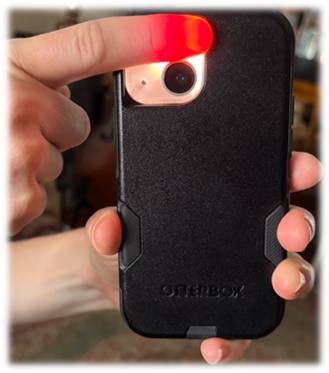
In this hands-on experiment conducted over five days, students start each class by measuring their heart rate variability, attempting different interventions hypothesized to bring aspects of their HRV into healthier ranges, then measuring HRV again and reflecting on the efficacy of the intervention. Responsible students without smart devices may use teacher or peer devices with appropriate consent. Materials Initial Procedure: WARNING This experiment requires students to download an app that collects deidentified personal information. Consult relevant student data and privacy guidelines and get appropriate consent before proceeding. Figure 2. How to place a finger over the light and camera to measure HRV Intervention Procedures: Teachers are invited to create their own interventions or query the class for activities students think might decrease stress. Guidelines to Respectful Conversation To support students to speak respectfully on sensitive subjects like social anxiety, they should discuss guidelines for creating a respectful and empathetic conversation space, adapted from Moran (2020). Professional communication in the sciences assumes a baseline knowledge of English in addition to specialized vocabulary. Because English Language Learners are often learning many new words across many different subjects, enriching their media experience with images is a way to reinforce language learning and provide additional supports to understanding the basic concept or practice. A card sort activity can be done individually or as a small group. After printing and cutting out the different cards (or having students do so, see Appendix: Animal Communication Card Sort Activity), the student then organize the cards into Marrs three levels of organization (some categories are much better represented than others). Then, the teacher displays images of different animals to the class. As a group or individuals, students pick out different cards they think represent how the animal communicates. The teacher can ask students to show their cards to indicate are response or circulate around the room. On a separate sheet of paper, one can extend the activity to have students write what they think the animals talk about in a group. Encouraging more speaking and listening in context is facilitated by the QTEL technique of Jigsaw Reading. In this QTEL approach, the class is divided into small groups of four to six students. The students in each group receive a paper copy of an article about human attempts at communicating with animals. Groups are then modeled how to read aloud one small chunk of text at a time, taking turns in a circle of readers. After each reader, the group then references a set of sentence starters to analyze the text aloud (see Appendix, “Connecting and Questions Bookmarks”). A presentation slide is shown with directions to remind students what they are doing in their groups as the teacher circulates to encourage participation. Differentiation of groups by difficulty of the text is already suggested in the articles (see Appendix, “Jigsaw Articles” 1 – 5) but educators may use an artificial intelligence of their choice to change the reading levels to make them more appropriate for their students. After reading and discussing for a certain number of minutes, students receive a table of questions to answer (see Appendix, “Base-Expert Questions Table”). It is essential this is done after the group discussion, or there is a tendency for students to read the article alone and answer the questions. Once the material has been analyzed in the “expert” groups, students are assigned new groups where they must verbally present information about their article and listen to other students explanations of their articles. The handout is then collected and graded. A support slide is shown reminding students to verbally explain instead of showing their paper to the students in the new group. Collaborative posters are a way to encourage all individuals to participate regardless of language ability. By asking for visuals, quotes, and explanations to be done, students can self-assign based on ability levels, but must also discuss among themselves what would be good roles, creating an opportunity for practical speaking and listening. Even if constructing a written explanation using scientific vocabulary might be too advanced for a student, they get to see the process of composition and can ask questions of peers rather than broaching the social dynamics of calling over the teacher. In this activity, students complete the Jigsaw Reading then create their own message they would communicate to animals in an attempt to change the world (see Appendix, Animal Communication Collaborative Poster Rubric). Each student writes on the poster in their own colored marker to indicate participation. They then sign their names at the bottom to indicate who contributed what colors. Be attentive that one student does not complete all the work using different colored markers.Measure and Analyze Heart Rate Variability

QTEL Card Sort Activity
QTEL Base-Expert Jigsaw Reading
QTEL Collaborative Poster
YouTube Video introducing Koko and Her Kittens: https://www.youtube.com/watch?v=gR6MeFFzqQ8 YouTube Video explaining communication via RoboBees: https://www.youtube.com/shorts/8rythjZ0KMs YouTube Video how seeing eye dogs communicate with their owners: Adolphs R. (2013). The biology of fear. Current biology: CB, 23(2), R79–R93. https://doi.org/10.1016/j.cub.2012.11.055 Associated Press (2016, July 16). US Navy banned from using sonar that harms dolphins and walruses. The Guardian. https://www.theguardian.com/us-news/2016/jul/16/us-navy-banned-from-using-sonar-that-harms-dolphins-and-walruses Bakker, K. (2022, November 2) How to Speak Honeybee. Noēma Magazine. The Berggruen Institute. https://www.noemamag.com/how-to-speak-honeybee/ Blöte, Anke & Westenberg, P. (2007). Socially anxious adolescents’ perception of treatment by classmates. Behaviour research and therapy. 45. 189-98. 10.1016/j.brat.2006.02.002. Bratman, M. E. (1992). Shared Cooperative Activity. The Philosophical Review, 101(2), 327–341. https://doi.org/10.2307/2185537 Breen, B. (2024, January 16). How Margaret Mead’s research into utopias ushered in the psychedelic era. [Radio Broadcast transcript]. NPR. https://www.npr.org/transcripts/1224894129?ft=nprml&f=1224894129 Cambridge Dictionary. (n.d.). Safety | Definition in the Cambridge English. Dictionary. Cambridge Dictionary. https://www.dictionary.cambridge.org/us/dictionary/english/ safety. Accessed 25 June 2025. Clinton, V., Alibali, M. W., & Nathan, M. J. (2016). Learning about posterior probability: do diagrams and elaborative interrogation help? The Journal of Experimental Education, 84, 579–599. Derryberry, E. P. et al. (2020). Singing in a silent spring: Birds respond to a half-century soundscape reversion during the COVID-19 shutdown. Science. DOI:10.1126/science.abd5777 Dodds, D. (2024, March 19). Short-Form Video Content: Capturing Attention in the Digital Age. Forbes. https://www.forbes.com/councils/forbesagencycouncil/2024/03/19/short-form-video-content-capturing-attention-in-the-digital-age/ Donders, F. C. (1969). On the speed of mental processes. Acta Psychologica, 30, 432 – 435. Dunlosky, J., Rawson, K. A., Marsh, E. J., Nathan, M. J., & Willingham, D. T. (2013). Improving students’ learning with effective learning techniques: Promising directions from cognitive and educational psychology. Psychological Science in the Public Interest, 14(1), 4–58. https://doi.org/10.1177/1529100612453266 Ellis, N. (2015). Cognitive and Social Aspects of Learning from Usage. In T. Cadierno & S. Eskildsen (Ed.), Usage-Based Perspectives on Second Language Learning (pp. 49-74). Berlin, München, Boston: De Gruyter Mouton. https://doi.org/10.1515/9783110378528-005 Gilovich, T., & Savitsky, K. (1999). The Spotlight Effect and the Illusion of Transparency: Egocentric Assessments of How We Are Seen by Others. Current Directions in Psychological Science, 8(6), 165-168. https://doi.org/10.1111/1467-8721.00039 Hawes, M. T., Szenczy, A. K., Klein, D. N., Hajcak, G., Nelson, B.D. (2022). Increases in depression and anxiety symptoms in adolescents and young adults during the COVID-19 pandemic. Psychol. Med. Oct. 52(14): 3222-3230. doi: 10.1017/S0033291720005358. Ingmire, J. (2015, April 29). Learning by doing helps students perform better in science. University of Chicago News. https://news.uchicago.edu/story/learning-doing-helps-students-perform-better-science Johnston, S.T., Painter, K.J. (2024). Avoidance, confusion or solitude? Modelling how noise pollution affects whale migration. Movement Ecology 12, 17. https://doi.org/10.1186/s40462-024-00458-w Kennedy J., Lynch H. (2016). A shift from offline to online: Adolescence, the internet and social participation. Journal of Occupational Science, 23(2), 156–167. https://doi-org.proxy.library.upenn.edu/10.1080/14427591.2015.1117523. Kent, O. (2013). 12. A Theory of Havruta Learning. In J. Levisohn & S. Fendrick (Ed.), Turn it and Turn it Again: Studies in the Teaching and Learning of Classical Jewish Texts (pp. 286-322). Boston, USA: Academic Studies Press. https://doi.org/10.1515/9781618117700-014 King, B. J. (2016, August 4). How Human Should a Gorilla Be? [Radio Broadcast transcript]. NPR. https://www.npr.org/sections/13.7/2016/08/04/488657897/how-human-should-a-gorilla-be Kuhl P. K. (2010). Brain mechanisms in early language acquisition. Neuron, 67(5), 713–727. https://doi.org/10.1016/j.neuron.2010.08.038 Kunc, H.P., Schmidt, R. (2021). Species sensitivities to a global pollutant: A meta-analysis on acoustic signals in response to anthropogenic noise. Global Change Biology. 2021; 27: 675–688. https://doi.org/10.1111/gcb.15428 Krammer, I., Schrank, B., Pollak, I., Stiehl, K. A. M., Nater, U. M., Woodcock, K. A. (2023). Early adolescents’ perspectives on factors that facilitate and hinder friendship development with peers at the time of school transition. Journal of School Psychology. Volume 98, 113-132. https://doi.org/10.1016/j.jsp.2023.03.001. Lange, J. (2016, July 19). Sonar used in 70 percent of the world’s oceans is probably hurting whales. The Week. https://theweek.com/speedreads/636941/sonar-used-70-percent-worlds-oceans-probably-hurting-whales Li, K., Cardoso, C., Moctezuma-Ramirez, A., Elgalad, A., & Perin, E. (2023). Heart Rate Variability Measurement through a Smart Wearable Device: Another Breakthrough for Personal Health Monitoring?. International journal of environmental research and public health, 20(24), 7146. https://doi.org/10.3390/ijerph20247146 Luther, D. A., Phillips, J., Derryberry, E. P. (2015). Not so sexy in the city: urban birds adjust songs to noise but compromise vocal performance, Behavioral Ecology, Volume 27, Issue 1, January-February 2016, Pages 332–340, https://doi.org/10.1093/beheco/arv162 Marr, D. (1982). Vision: A Computational Approach, San Francisco, Freeman & Co. Moran, A. (2020, May 15). Teaching Tough Topics: Helpful Tips for Covering Sensitive Issues in the Social Studies Classroom. Population Education. Teaching Tough Topics: Helpful Tips for Covering Sensitive Issues in the Social Studies Classroom Morillas, J.M.B., Gozalo, G.R., González, D.M. et al. (2018). Noise Pollution and Urban Planning. Current Pollution Reports 4, 208–219. https://doi.org/10.1007/s40726-018-0095-7 Nadel, L. and Piattelli-Palmarini, M. (2003). What is cognitive science? Encyclopedia of Cognitive Science. [PDF]. NGSS (2013, June 5). APPENDIX F – Science and engineering practices in the NGSS. Next Generation Science Standards. https://www.nextgenscience.org/sites/default/files/Appendix%20F%20%20Science%20and%20Engineering%20Practices%20in%20the%20NGSS%20-%20FINAL%20060513.pdf Ortega-de San Luis, C. et al. (2022) Understanding the physical basis of memory: Molecular mechanisms of the engram. Journal of Biological Chemistry. Volume 298, Issue 5, 101866. Penn Psychiatry Center for the Treatment and Study of Anxiety. (n.d.) Social Anxiety Disorder. https://www.med.upenn.edu/ctsa/social_anxiety_symptoms.html Pennsylvania Department of Education. (2022). Science, Technology & Engineering, Environmental Literacy & Sustainability (STEELS). [PDF]. https://files5.pdesas.org/098101110046208014204216076055002229178022119083/Download.ashx?hash=2.2 Polk, M. (2021, January 25). The Power of Sentence Stems. The Literacy Dive Podcast. Robinson, O. J., Vytal, K., Cornwell, B. R., & Grillon, C. (2013). The impact of anxiety upon cognition: perspectives from human threat of shock studies. Frontiers in human neuroscience, 7, 203. https://doi.org/10.3389/fnhum.2013.00203 Smith, K. (2024). “Descartes’ Theory of Ideas.”,The Stanford Encyclopedia of Philosophy. https://plato.stanford.edu/archives/sum2024/entries/descartes-ideas/ Stieger, S., Lewetz, D. & Willinger, D. (2023). Face-to-face more important than digital communication for mental health during the pandemic. Sci Rep 13, 8022 (2023). https://doi.org/10.1038/s41598-023-34957-4 Speer, K. E., Semple, S., Naumovski, N., McKune, A. J. (2020). Heart rate variability for determining autonomic nervous system effects of lifestyle behaviors in early life: A systematic review. Physiology & Behavior. Volume 217. https://doi.org/10.1016/j.physbeh.2020.112806. Südhof T. C. (2012). Calcium control of neurotransmitter release. Cold Spring Harbor perspectives in biology, 4(1), a011353. https://doi.org/10.1101/cshperspect.a011353 Twenge, J. M. Martin, G. N., & Spitzberg, B. H. (2017). Trends in U.S. Adolescents’ Media Use, 1976 –2016: The Rise of Digital Media, the Decline of TV, and the (Near) Demise of Print. Psychology of Popular Media Culture. Vol. 8, No. 4, 329 –345. http://dx.doi.org/10.1037/ppm0000203 Voncken, M. J., & Dijk, K. F. (2013). Socially Anxious Individuals Get a Second Chance After Being Disliked at First Sight: The Role of Self-Disclosure in the Development of Likeability in Sequential Social Contact. Cognitive therapy and research, 37(1), 7–17. https://doi.org/10.1007/s10608-012-9449-4 Vygotsky, L. (1934). Thought and Language. (1934). MIT Press. Weinstein, Y., Madan, C.R. & Sumeracki, M.A. (2018). Teaching the science of learning. Cognition Research 3, 2. https://doi.org/10.1186/s41235-017-0087-y Wickramaratne PJ, Yangchen T, Lepow L, Patra BG, Glicksburg B, Talati A, Adekkanattu P, Ryu E, Biernacka JM, Charney A, Mann JJ, Pathak J, Olfson M, Weissman MM. (2022, Oct 13). Social connectedness as a determinant of mental health: A scoping review. PLoS One. 17(10):e0275004. doi: 10.1371/journal.pone.0275004. Wilson, C. J. (n.d.). The Logical Neuron. Department of Neuroscience, Developmental and Regenerative Biology, University of Texas at San Antonio https://marlin.life.utsa.edu/mcculloch-and-pitts.html World Health Organization (2022, March 2). COVID-19 pandemic triggers 25% increase in prevalence of anxiety and depression worldwide. https://www.who.int/news/item/02-03-2022-covid-19-pandemic-triggers-25-increase-in-prevalence-of-anxiety-and-depression-worldwideBibliography
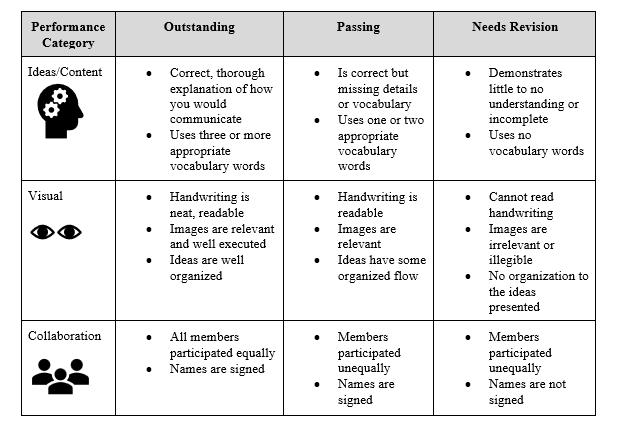
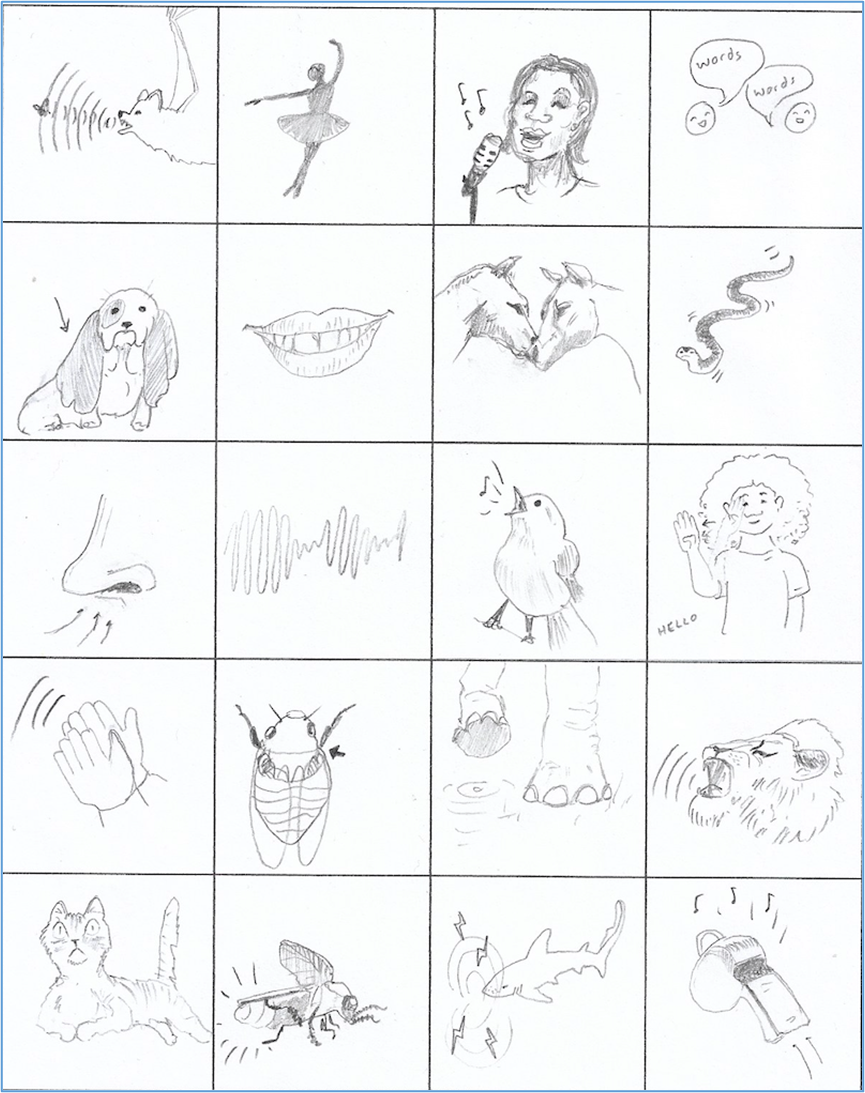
Pennsylvania STEELS 3.1.9-12.O, “Evaluate the evidence for the role of group behavior on individual and species’ changes to survive and reproduce.” Marr’s Three Levels of Analysis Card Sort Categories Animal Communication QTEL Card Sort Activity Animal Communication QTEL Card Sort Activity Jigsaw Article 1. John C. Lilly and the Difficulties of Talking to Dolphins (Breen, 2024) modified excerpt from NPR’s Fresh Air The person at the center of this story is a guy named John C. Lilly, who invites another scientist, Gregory Bateson, to join him at this dolphin research lab he’s set up with NASA funding in the U.S. Virgin Islands. And John C. Lilly is a physiologist, is a kind of early neuroscientist who’s really deeply committed to this idea that using things like computers and emerging scientific techniques, it should be possible to communicate not just with dolphins but with whales as well, with cetaceans. At least by Lilly’s account, they are able to start communicating with them. And I’ve actually listened to recordings that are now held by Stanford of them attempting to speak to the dolphins. And you can actually hear them very laboriously trying to get them to count from one to 10 and things like that. Lilly’s idea was that if you slowed down the recordings of the dolphins, you would be able to hear them making understandable words in English. So he thought the dolphins were – their speech is so high-pitched, their calls are extremely high in the sonic register that if you use computers to lower that pitch, you would actually begin to hear them communicating. We do know dolphins have very advanced brains. They – dolphins and whales do have, language abilities. So John C. Lilly meets the producer of “Flipper” and of “Sea Hunt,” who, through reasons that are still kind of shadowy and unclear, had become really into LSD at this point. So this producer of “Flipper” befriends John C. Lilly because Lilly’s a dolphin expert. Lilly’s buying dolphins from the “Flipper” set to use in his experiments, and Lilly begins using LSD and injecting the dolphins with LSD and himself with LSD and spending literally hours at a time trying to talk to them. And again, you can listen to these recordings. If you search online for the words John C. Lilly, dolphin, LSD, Stanford, you will find many, many tape recordings of this. And, the dolphins do not do well from that point onwards. NASA cuts their funding, the money runs out, their tanks get more and more cloudy. Bateson moves away to Hawaii to start his own dolphin lab, strongly disapproving of this, and Lilly continues on with this futile quest to get dolphins on LSD to speak to him. And ultimately, by his own account, he claims in his memoir that at least a few of the dolphins he’s working with commit suicide, because dolphins can refuse to breathe. All NPR content (audio, text, photographs, graphics, videos) is protected by copyright in the U.S. and other countries. K-12 teachers may make up to 30 copies of transcripts of NPR content for one-time classroom use. Jigsaw Article 2. Koko the Gorilla and American Sign Language (King, 2016) excerpt from NPR’s Cosmos & Culture: Commentary on Science and Society Koko, age 44, began to learn as an infant to communicate with humans through use of American Sign Language (ASL). She went on to become the most famous gorilla in the world. The power Koko’s life is that it shows how reflective gorillas are, and how profoundly they may feel emotions. Penny Patterson, the psychologist who began working with Koko when the gorilla was an infant at the San Francisco Zoo in 1971 —says as much: It’s not how many ASL signs Koko acquired at what age that matters most, but instead the understanding that Koko feels and expresses love. Famously, Koko felt quite sad in 1984 when her adopted kitten Ball was hit by a car and died. How do we know? Here is nonhuman primate grief mediated through language: In historical footage in the film, Patterson is seen asking Koko, “What happened to Ball?” In reply, Koko utters these signs in sequence: cat, cry, have-sorry, Koko-love. And then, after a pause, two more signs: unattention, visit me. Patterson replies, “He doesn’t visit you anymore.” I believe that Koko felt sadness at Ball’s death and that she described her feelings by combining ASL signs together. When Patterson started teaching ASL signs to Koko in 1971, little was known about interspecies communication. No one thought much about the ethical costs of turning a gorilla into a sort of hybrid animal caught between a gorilla world and a human one. Patterson’s research project took on a snowballing life of its own, fueled by her own love for Koko and also by increasing media attention. Now there’s no other life that would suit Koko. She lives in a small circumscribed world of dialogues and games with caregivers, play with dolls, decorated cakes on her birthday — and her own credit card (no explanation is offered in the film for how Koko uses a credit card). Koko isn’t our only window into gorilla consciousness. Wild gorillas have been seen seeking out and dismantling poachers’ snares in the forest. All gorillas — free-ranging in Africa, confined to zoos, living in a trailer in Woodside, Calif. — are smart apes who feel emotions. If only our species was better at just letting gorillas — and their natural habitat — just be. All NPR content (audio, text, photographs, graphics, videos) is protected by copyright in the U.S. and other countries. K-12 teachers may make up to 30 copies of transcripts of NPR content for one- time classroom use. Jigsaw Article 3. The Dance of Bees and Robots (Bakker, 2022) interpreted from the Berggruen Institute’s Noēma Magazine article, “How to Speak Honeybee” When western honeybees communicate with their sisters, it looks a lot like dancing. Walking in figure eights while “waggling” their abdomens from side to side, humans had observed this pattern for a long time before Austrian scientist Karl von Frisch learned its secrets and won the Nobel Prize. His big idea was that this dancing was a form of language. At the time he began studying Apis melliflora in 1912, the majority of people believed that only humans had true language, and that tiny-brained bugs were especially incapable of such complex communication. Language in humans is not just the noises we make. It also includes facial expressions, tone, and other ways we stand and move while talking. For bees, most of their communicating is done with vibrations and how they hold their bodies while dancing. Buzzing, angling, and rotating allows bees to communicate a surprising amount of information. A bee who has located a large flower patch can return to the hive and tell her sisters using the waggle dance. As her sisters watch the pattern of dancing, she is telling them where is the sun relative to the sky, and how long she dances tells them how far away it is. The Austrian scientist Frisch tracked thousands of bees as they flew around looking for food and then communicated it back at the hive. After a lot of patience and a lot of documenting his findings, he discovered how the dance moves told the locations of food. In one experiment, he took a single bee to a secret location across a lake and beyond a mountain. After she flew home, the hive was able to navigate to the food. Like human language, different hives have slightly different dances to communicate information, and when sleep deprived, bees have a harder time sharing precise information. This is one of the most complicated ways animals communicate that humans have ever figured out. Even though some scientists still argue about whether or not it’s a language, the dance is how bees share information, work together, and form groups. One of the wildest things to come from this discovery is “robot bees” made by Professor Tim Landgraf, who studies math and computers in Berlin. His research uses computers to automatically identify individual bees and follow their movements, then built tiny robots, called “RoboBee,” that can communicate with honeybees in their own language. Early versions of RoboBee weren’t very good; they sometimes made the bees attack, bite, sting, and even drag the robot out of the hive, but the seventh version of RoboBee was a big success! A lot of bees actually followed RoboBee’s dance and flew to the exact spot Landgraf had told them to go. He had created something like a “Google Translate” for bees. This is just the beginning of what his work could show us about how a bee colony thinks and processes different kinds of information. It’s almost like a living computer made up of thousands of connected brains. Jigsaw Article 4. Seeing Eye Dogs Don’t Just See, They Talk! from “Guide Dogs 101” by Guiding Eyes for the Blind You know how sometimes it’s hard to explain what you need, even to another person? Imagine trying to tell a dog something really important! That’s why the training for seeing eye dogs, also called guide dogs, is so amazing. It all starts when puppies are very young, often just a few weeks old. They don’t just learn tricks; they learn how to understand human requests and, even more importantly, how to tell their human what’s happening around them. First, the puppies live with foster families who teach the puppies good manners and get them used to all sorts of places and sounds – busy streets, quiet parks, loud noises, and different kinds of people. This helps the dogs stay calm and focused no matter what’s going on. When they’re about a year old, the dogs go to a special guide dog school. Professional trainers work with them every day, teaching them skills they’ll need as a guide dog. Seeing eye dogs don’t use words, but they communicate in very clear ways: The last part of the training is when the dog meets its future human partner. They spend several weeks together, learning how to work as a team. The human learns how to give commands clearly, and the dog learns to understand their specific partner’s voice and movements. This time is crucial for building trust and a strong bond. Their training is a wonderful example of how humans and animals can work together, building a special language of trust and teamwork that helps people live fuller, safer lives. Jigsaw Article 5. The Parrot Who Said, “I love you” (Pepperberg, 2009) excerpt from NPR’s Fresh Air How many times have you wished you could talk with your pet and find out what they were thinking? Irene Pepperberg wanted to conduct research into animal thinking, so she bought a talking bird from a pet store, a gray parrot she named Alex. Her idea was to copy communication research in chimps, using an animal that could talk. Alex became her good friend as well as her longtime research subject. As a result of their work together, he probably became the most famous parrot in the world. When he died two years ago at the age of 31, he got an obit in the New York Times headlined, “Brainy Parrot Dies, Emotive to the End.” How many words was Alex capable of saying? Dr. IRENE MAXINE PEPPERBERG: There was good data on about 50 different object labels, seven colors, five shapes, quantities up to eight just before he died. And then he would combine these to identify, request, refuse, categorize, quantify more than 100 different things in the laboratory. So once he knew block, then he knew green and yellow and orange, and so he could identify the green block, the yellow block, the orange block, things like that. GROSS: How much ability did he have as a parrot to pronounce the words that you wanted him to say? Dr. PEPPERBERG: He got most of them right. There are some of them that are really tough, like imagine saying paper without lips, and he actually did that. But final S’s always seemed to get him, so he would say things like Alec instead of Alex. He would say six by saying sic, and we had to really push him to say sic, sic to get that final S-type noise. So there were some things that were tough. GROSS: What do you think your work with Alex, and with your other parrots, proves about the abilities of animals to think and communicate? Dr. PEPPERBERG: Well, what Alex really did was lay waste to the term birdbrain as something derogatory. He really did show that this creature with a brain the size of a shelled walnut could do the same types of tasks that the apes did and the dolphins did and in many cases, young children could do. It was a major breakthrough. GROSS: Can you describe the training models that you used to teach your parrots how to communicate? Dr. PEPPERBERG: We used something called the model/rival technique and it is very, very simple. We started by finding objects the bird wanted, and we would decide to train him those labels. So the bird would be on a perch. My student and I would have this object, say it was a piece of wood that the bird really wanted to chew. And I would show it to my student, who is the model for the bird’s behavior and its rival for my attention, and I’d ask her, what’s this? And she’d say, wood. And I’d say, that’s right. It’s wood. And I’d give it to her, and she’d go, wood, wood, wood. And she’d proceed to break it apart. And the parrot’s, you know, practically falling off the perch. Alex really wanted this object, and he was really watching. GROSS: Did you think he could count? Dr. PEPPERBERG: He did. We really had data on counting. And when we did a study on addition with Alex, we would put numbers of things under cups. And there would be like, say, two nuts under one cup and three nuts under the other cup. And we’d lift the first cup and we’d say, look, and after a second, cover those nuts. Pick up the second cup, show it to him for a second and say look, put it down. And then with both cups on the tray covering the nuts, we’d say, how many? And he’d say, five, and he was fine, but he couldn’t do five and zero. Five nuts under one cup, and no nuts under the other. And we couldn’t figure that out at first. Every time we did that, he’d say six. And then it finally dawned on me that oh, maybe he’s doing what humans do. We’re not giving him time to actually count. GROSS: In your book, you describe a time when you were teaching at the University of Arizona in Tucson, and you were living outside the city. And you had brought Alex home with you, which you didn’t typically do. And there were a couple of owls outside the window, which terrified your parrot, Alex. And would you describe the communication that happened after he got really freaked out by the owls? Dr. PEPPERBERG: Yeah. I mean, normally, when I would bring him home, the first minute or two, he would say, want to go back. And I’d say, oh, just calm down. You’re fine. And then he would look around the cage, see there was food, there was water, there were toys, and OK, he was fine, and he would settle down. Well, this time, he was just going on and on – want to go back, want to go back, want to go back. And he’s staring out the window. And I finally realized that there were these little screech owls – little, tiny screech owls that were nesting up there. And so my first response was to just close the shade and say, look, they’re out there. You’re in here. You’re safe. But Alex had something called object permanence. And he knew those owls were still out there, and he just kept insisting – want to go back, want to go back. So, I had to take him in the carrier and bring him back to the lab that night. And he never really came back to the house after that. GROSS: Alex was hospitalized with a life-threatening infection. How did you try to communicate with him when you had to leave him at the hospital? Dr. PEPPERBERG: Oh, that was – that was so incredibly difficult. He knew phrases like, you know, I’ll see you tomorrow, I’ll be back, because we would say that every night when we put him in the cage. And so here, we’re not leaving him in his normal place. I mean, we’re putting him in this little hospital cage, in a strange place with all these people, many of whom he didn’t know. He knew the vets themselves, but not the technicians. And as I walk out the door, he looks at me, and he says in this pitiful voice, I’m sorry. Come here. Want to go back. And you sit there and look at him and go, oh, well, how am I going to explain this? And I just kept saying I’ll be in tomorrow. I’ll see you tomorrow. I promise. I’ll see you tomorrow. And finally, he calmed down, and, of course, I made sure that I was there tomorrow. GROSS: How do you think he knew to say I’m sorry? Dr. PEPPERBERG: When he did something bad, you know, if he bit somebody or if he threw things on the tray and we’d get angry at him, and, you know, we’d say bad boy, you know, don’t do that, no. He learned over time that, you know, the phrase I’m sorry was very good. He would say it in this pathetic little voice -I’m sorry. And, of course, you’re a little – you go oh, you know. Your heart melts even though you know there’s no contrition. So that was something that he had associated. And I guess something in his little bird brain said, oh, they put me in this horrible place because I’ve been a bad boy. Maybe if I say I’m sorry, you know, things will get better. I mean, I’m just guessing at that. I think that for many animals, we need to figure out the appropriate channels to use. Obviously, Alex could talk. People who work with apes use computers and sign language. People who work with dolphins also use computers and sign language, and in a sense, pushing them to communicate with us is unfair. But it’s one way of our actually getting a window into their minds to actually determine how they process information, how they think, by giving them these tools. All NPR content (audio, text, photographs, graphics, videos) is protected by copyright in the U.S. and other countries. K-12 teachers may make up to 30 copies of transcripts of NPR content for one- time classroom use. Animal Communication Collaborative Poster Rubric Goal: Come up with a new way to communicate with a living thing (other than humans) and what you would communicate to try to help the Earth. Requirements: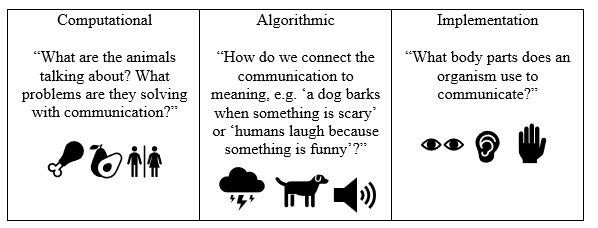
echolocation
dancing
singing
talking
ears
mouth
touching
moving
scent (pheromones)
vibrations
chirping
sign language
clapping
tymbal
stomping
roars
body language
bioluminescence
electrical signals
whistle
Connecting Bookmark
Connect
What I can say
I am going to connect this to my prior knowledge / experiences to help me understand.
I know something about this from…
I have read or heard about this when…
I don’t understand the section, but I do recognize…
I am going to connect this to related concepts and/or readings.
One reading/idea I have seen before that relates to this is..
We learned about this idea/concept when we studied…
This concept/idea is related to…
Questioning Bookmark
Question
What I can say
Ask Questions: I am going to ask questions about ideas and phrases I don’t understand.
Two questions I have about this section are…
I understand this part, but I have a question about…
A clue A clue in the text that answers my question is…
I have a question about…
Visualize / Visuals / Data: I am going to use related text, images (photos, paintings, etc.), tables, charts, and /or graphs to help me understand unclear ideas.
The image (photo, painting, sketch, etc.) helps me create a picture in my mind about… because…
When I scanned the earlier part of the chapter, I found…