“Cogito, ergo sum”
“I think, therefore I am”
-René Descartes
In preparation for attending the seminar entitled Introduction to Cognitive Science: Uncovering the Machine in the Mind, I was enthusiastic to start thinking about thinking. It is, after all, what makes us human right? The APA defines thinking as the “cognitive behavior in which ideas, images, mental representations, or other hypothetical elements of thought are experienced or manipulated” (2025). Ironically in my elementary classroom, I have communicated to students that I can give them 100 strategies, but I can’t make them think. In so many ways, I have not seen myself as the kind of teacher that can do that. Instead, I am full of ideas and facts and fun ways to do things that hopefully spark the flame for students to want to think. I am the facilitator of knowledge, beckoning children to explore, learn and desire to think. More and more, that goal is getting harder to reach. In 2022, the National Assessment of Educational Progress (2025) reported that among 9 year olds, 2022 was the first drop in math performance since 1973 coming out of the pandemic in 2020 by 7 points on standardized assessments. For 13 year olds the 2020-2022 dip was 9 points. Clearly the pandemic curtailed the upward growth of students’ achievement. Additionally, one could argue that as math gets harder, students do worse, as evidenced by the 9 vs 13 year old performances. In the classroom, besides the ever dreaded unit on fractions, math word problems have particularly been difficult. The major difference there is that word problems can be used with any operation and are therefore found across units and skills instruction, so students can potentially struggle all year. What is going on?
Aside from the obvious factor that if students can’t read the word problems (WP) because reading is difficult and they don’t know what the problem is asking, what are some other reasons students struggle? It is important to note that unlike mere calculations, word problems contain a host of information that needs to be processed before calculations even begin (Swanson and Beebe-Frankenberger, 2014), including the ability to use working memory, or to hold on to ideas while doing something with those ideas and others, simultaneously. Fuchs et al (2019) take Swanson’s and Beebe-Frankenberger’s research further and point to working memory deficits as one major reason students struggle, no matter the curriculum. In other words, it’s one thing to know you need working memory to solve word problems, it is another to know that if students have an inability to successfully use working memory, WP become difficult to teach.
Additionally, I have seen a change in the way teachers have been prescribed to teach word problem solving. In the beginning of my 25+ year career, a teacher had on display, posters that gave key or clue words for each type of elementary school level WP. Addition word problems used words like “altogether”, “in all”, and “in total” to name a few. Subtraction word problems used “left” and “difference” frequently. These words and terms were on posters that claimed to help students “crack the math code”, fully acknowledging that there is vocabulary specific to word problems. The issue with this strategy is that students could be stuck on how to do the computations once they identified the operation clue word or that the clues were for the inverse operation, however this would be very difficult for nonreaders.
Then there was a shift and the CUBES strategy, which is an acronym for the steps to follow to solve word problems (Table 1), became a popular teaching strategy. This strategy included the clue word strategy, but helped more by walking students through the whole problem. The issue with this strategy is that students that can’t or won’t read are still going to make mistakes because they go straight to the steps instead of thinking.
Recently, however, neither of these specific strategies are employed as a method for teaching WP solving- in fact teachers are told not to use them. Two very significant things happened to create an environment where they are no longer effective strategies: WP no longer gave clues and many involved more than one step (Table 2). Essentially, the goal, as per the new common core, was for students to understand the story within the problem and then solve it. And of course to understand the WP brings us back around to the first problem: if students can’t read, now they really had no strategy.
| C |
Circle the numbers + units |
Russ loves apples. One week he had 20 apples. He ate 7 apples. How many apples does he have left? 20 – 7 = 13 apples |
| U |
Underline the question |
| B |
Box the action (clue) words |
| E |
Evaluate & Eliminate |
| S |
Solve |
Table 1: CUBES word problem solving strategy
| There are 3 numbers |
Russ had 13 apples at the end of the week. He had eaten 1 apple a day for the previous 7 days. How many apples did Russ have in the beginning of the week?
1 x 7 = 7
13 + 7 = 20 |
| To answer the question, there is one additional step |
| “How many did _ have” and “eaten” are the clues, but they’re misleading |
Table 2: Newer word problems
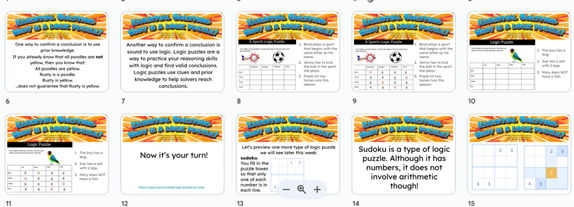
In order to now teach WP solving, at least one lesson has to be done on how WP can mislead or “trick” you by using words that are not clues to the operation needed to solve it. This has brought me to two of my favorite ways of teaching, but has still limited the ways in which I can help my students. First, we use our bodies to understand the four basic operations and pantomime the situation described in the WP. We “hold” whatever is the subject of the WP and move objects in or out of our arms according to the operation. For example, hold 20 apples in your arms. Take out 7. What did we do? We subtracted! Another example is, hold 20 apples. Give 5 friends two apples each. That repetitive movement out of your arms is repeated subtraction and repeated subtraction is… division! Seccia and Goldin-Meadow (2024) presented a literature review that shows how
The gestures we produce serve a variety of functions—they affect our communication, guide our attention and help us think and change the way we think. Gestures can consequently also help us learn, generalize what we learn and retain that knowledge over time.
They suggest that within the mathematics classroom, gestures should be researched and developed for “classroom learning”. Gesturing also helps with dealing with working memory issues associated with math WP, which will be discussed as it impacts WP success. In 2014, Novack et al. concluded “that gesture not only supports learning a task at hand but, more importantly, leads to generalization beyond the task” and further wondered whether “saying words while gesturing may help a learner integrate and internalize those words”. In other words, gesture, as opposed to just manipulatives, paired with spoken language might be worth a try to boost math success.
Which brings me to the second point that we also sing in my classroom. I sing the spelling of words when asked and require the students to sing it back to me, I sing a song for putting away laptops, and I also use a website with rap songs for social studies content that we all sing along to. Pretty much any time I can, I sing. And it is not because I sound nice, which I do not. We sing because it helps students remember. We sing to remember the steps of multiplication and division because those are additional things to remember how to do once you figure out which one you need to solve the WP, so the memorization of the song removes the requirement of remembering the steps while also doing the computations. Werner (2018) supports this type of learning experience even to the point of giving directions on how to do it easily: take a well known song (ie. Jingle Bells) and swap out the lyrics for your content (ie. literally anything). Werner also notes that “coupling gestures with these lyrics can further aid retention, but in order for gestures to be most effective they should be paired with individual words rather than with whole lines.” Ultimately, the best practice is to have kids learn gestures and songs while they learn if a longlasting memory is to be made and skills applied over time.
Unfortunately, these strategies are not enough. My students, who are general education (GenEd), Special Education (SpEd), and English Learners (EL), still struggle with WP solving. What is needed is another strategy to help students that is not one more thing for them to learn. In other words, teachers need to do a little more heavy lifting in order to help kids improve their ability to solve problems that are made difficult for them to solve. It can’t just be adding another strategy for them to learn and apply, it has to be a way of thinking. I have to be able to make them think.
In the 1980’s research explored how language, computation, and problem solving ability affected student’s ability to solve WP, with some research hinting at memory being a part of the process. In the 90’s there was focus on model building in the sense that students need to learn to parse WP in order to solve them. In the past twenty years, the research has centered around working memory issues (Swanson, 2025), schema development, and seeing which grade levels are most helped by which intervention strategies.
Kintsch and Greeno (1985) hypothesized that the understanding of semantics and problem attack strategies are essential in WP solving:
…children’s experience in solving word problems results in their acquiring a special set of strategies for constructing mental representations of texts that are suitable for applying mathematical operations such as addition and subtraction. That is, readers learn not to use normal comprehension strategies that are appropriate, say, for reading stories or essays, but rather to analyze the text in a specialized way.
This research sets the stage to formally present students with strategies that are specifically about the reading comprehension of WP and their language prior to addressing arithmetic issues. To me, this is the foundation for the posters we had with WP clue words.
Hegarty, Mayer, and Monk (1995) successfully hypothesized “that when confronted with an arithmetic story problem, unsuccessful problem solvers begin by selecting numbers and keywords from the problem and base their solution plan on these—a procedure we call the direct-translation strategy” and “successful problem solvers are more likely to use a problem-model strategy.” This research contradicts the CUBES strategy and supports the idea that students need more than quick steps to solve WP. This research supports the need for a way of thinking and not just a quick strategy: “less successful problem solvers do not switch to a more meaning-based strategy with brief practice alone. If unsuccessful problem solvers are prone to use a short-cut comprehension strategy, they need a reason to change to a more meaning-based strategy.”
Fuchs et al (2008) states that “a word problem requires students to use the text to identify missing information, construct the number sentence, and derive the calculation problem for finding the missing information”. It may seem intuitive to think that the issue students have could be computational issues if we account for reading not being an issue. However, that is not the case. Students’ lack of attention to the problem was also thought to be a possible reason for poor WP solving. However, Bates and Wiest (2004) thought to posit that if WP were made to be more individualized and were centered on specific students’ interests, students could solve them with better efficacy and success since the subject matter was more relatable. Their conclusion was that there was “no significant increase in student achievement when the personalization treatment was used regardless of student reading ability or word problem type” even though there was some research to the affirmative (Ensign, 1997; Fairbairn, 1993; Giordano, 1990; Hart, 1996). This is interesting because it speaks to the style that many teachers employ of putting their students’ names in the problems to help them solve them (guilty). To be honest, if this had worked consistently, it likely would have exploded as a viable strategy. Students could be taught to change the names and objects in WP in order to solve them. This research makes the case that simply tying WP specially designed to one’s own real life is not enough and that the working memory devoted to holding the who and what in a word problem cannot be easily solved as a barrier.
Diving into more recent research, the case has been made for several approaches to diminishing the gap between good WP solvers and struggling WP solvers. Lynn and Douglas Fuchs have a body of research that examines working memory and WP solving and many researchers have used their work to branch off and make other interesting hypotheses. So far, targeting issues with working memory and understanding the language of WP seems to be the main way I have researched to be a solution.
A next step seemed to be to find strategies that can help when language is still a barrier. The number of below grade level readers, SpEd, and EL students has risen in my experience and math continues to be a favorite subject even among these students because they perceive it not be about the ability to read. Xin (2018) suggests that “elementary students with learning difficulties can be expected to move beyond concrete operations and to represent mathematical relations algebraically in conceptual models that drive the solution plan for accurate problem solving” and therefore model building is a good strategy to help students solve WP.
Fuchs. et al (2021) came to the conclusion that students need specific instruction in models for solving WP with different operations, that they call “schema-based WP intervention”. In other words, they suggest students learn to break WP apart into steps, like the CUBES strategy, but unlike that strategy, to identify the words and what they refer to and organize them that way. Where CUBES is about pulling apart the WP simply for computation, their schema strategy pulls WP apart based on meaning. The model identifies the characters of the WP, the objects being compared, and then the relationship, or operational procedure needed to relate the objects based on the story.
This schema-based WP intervention can compensate for the working memory issues that poor WP solvers struggle with if paired with a model or diagram creation. If you are looking to help your SpEd, EL, and below grade level students, the working memory must be acknowledged as a serious issue. Teachers in the classroom know this inherently. Some students cannot be told more than two directions at a time. Some students forget halfway through the directions what the first part was. Unfortunately, many teachers call this lazy or inattention. Research shows that there is more to it. In 2019, Fuchs et al stated, “Few studies have assessed working memory improvement as a mediator of working memory training transfer; none have really investigated working memory improvement as a mediator of transfer to math outcomes in students with math difficulties” and at the time had not concluded that one intervention was best overall- possibly due to the cost of interventions and the lack of variety to address all the possible solutions.
Combining all these research based theories and explanations, I am led to believe that in order to get students thinking through problem solving strategies for WP solutions, they need explicit WP schema training so that figuring out what is happening in a WP is second nature. Computational mastery comes in other lessons in math class and research suggests that computational mastery is, by itself, insufficient for solving WP. Therefore, if we want students to solve WP, we need a very targeted approach that spans grade levels. In Fuchs et al schema-based WP intervention presentation, they mention that even parents can join in by asking questions from preschool age with more gusto and focus towards problem solving than just computation and identification. Instead of just asking how many cats in the pet store window, follow up by asking how many gray cats. I think it’s about training the mind to think in terms of what you see and what the relationship between those things are.
Since most research about word problems centers around the fact that students struggle with them and why, in order to find ways to train students, the majority of current strategies are not research based, but experience based, usually from teachers or former teachers. The online blogger Hannah Braun (2025), proposes a chart that can be taught that sets up students for success by identifying the scheme types of all (or almost all) word problems. (Fig. 1) This chart follows the recommendation of Fuchs. et al (2021) suggested.
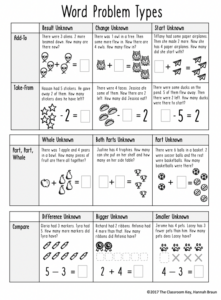
Figure 1: from “How to Teach Difficult Word Problems like a Boss”
by Hannah Braun
Although I could not find the genesis of numberless word problems, it is clear that they were introduced to help build schema for a situation, on which can be layered mathematical computations in incremental form. For instance, most of us can picture apples on a table. Many students with SpEd and EL limitations can be presented with that scenario and grasp it- literally if manipulatives are involved. Once that is understood, the idea that some apples were used to make a pie can be layered on. Ok, got it! Now if we find out the number of apples, a myriad of WP can be asked. The goal with numberless word problems is to understand the language and relationships between the components of the WP. (Table 3).
| There are some markers on a desk. |
There are 10 markers on a desk. |
There are 10 markers on a desk. Some of the markers roll off the desk. |
There are 10 markers on a desk. Two of the markers roll off the desk. |
There are 10 markers on a desk. Two of the markers roll off the desk. How many markers are still on the desk? |
Table 3: Numberless Word Problem from https://numberlesswp.com/
Numberless word problems make the situation in a WP the most important thing and that allows all students to relate and connect before any math is started. Plank and Dyess (2022) state that, “The numberless math story launch is meant to provide an equitable starting point for problem solving. Because the story is about a familiar topic, all children have a way to join the mathematical conversation and access the math story. The launch offers learners a space to discuss and understand the story’s context”. Once the scenario is understood, students can then begin to create a math model of the problem. Carle (2023) found that numberless word problems “helped a majority of students perform better when solving addition and subtraction word problems” and suggested that “instructional time… be dedicated to helping students create accurate bar models”. Bao (2016) explains that bar models help students because they “provide them with a tool to support the understanding of the problem, identify the relationship and operations they need and hence work out a strategy for finding the answer”. In many ways, numberless word problems paired with discussion get to the heart of teaching kids to think, or at least think about, something. They are the first steps in building an analytical mindset to examine a situation.
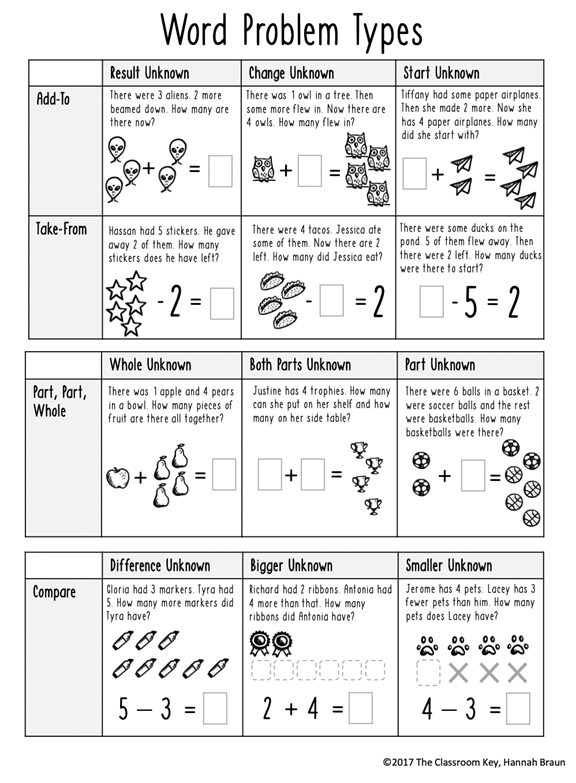
Another potential tool for helping students improve their WP solving skills by helping to teach them to think, is the use of logic puzzles or syllogisms. In reference to logic puzzles, in 2020, Danesi states, “First, no specific background information or knowledge is required to solve them. Second, exact thinking is required, whereby facts are matched and evaluated for consistency.” If the goal is for students to get better at problem solving without learning new strategies, it may be beneficial for them to practice solving problems unrelated to anything yet completely endowed with correct answers as a matter of moving step by step. By my logic, students can hone their problem solving skills without learning new computations, language, vocabulary, or models. Rosenhouse (2020) chronicled the history of logic puzzles, atributing them as games to Lewis Carroll in The Game of Logic in 1886. In Wilson et al.’s (1990) logic puzzle use with college students, it was found that “students who were introduced to logic puzzles scored significantly higher than those who were not.” Modern logic puzzles are already set up in grid type structures and the point is to whittle away the answer by taking note of what is and what is not. Students can hop into them and just work on figuring out the situations. As a personal proponent of game based learning, like brain teazers in Aliyari et al. (2021) who found “improved cognitive elements”, a classroom of struggling math WP solvers could use more fun: “game-based learning concept can serve as a basis for remedial education or course management and as reference for curriculum design and interactive models.” (Weng, 2022)
Models in WP have always been seen as beneficial, but alone have not been the key to helping struggling math students. I believe it is necessary after numberless word problems and logic puzzles have been practiced, to learn to build the model. Otherwise, students are building the models all wrong, or at least with the wrong information. Models with images, and then without images, is the key in moving from a concrete understanding to an abstract understanding, which will end up being the basis for most WP after 4th and 5th grade, as pre algebra starts being introduced.
This examination of student difficulty in solving word problems would be incomplete without the mention of the lack of cultural diversity within math curriculums as compared to the demographics of many classrooms. In other words, the stories and scenarios in math textbooks have been historically skewed to white American experiences and the research shows this to have been a factor in student achievement gaps (Bright, 2016). However, I want to say that as of the writing of this curriculum unit, the School District of Philadelphia has made many efforts, from the newly purchased curriculum to professional development on equity and instruction, to mitigate that as a factor. Although the gap among different racial (and gender) groups is still prevalent, steps are being taken to make sure it is not due to a biased curriculum. The work is ongoing.
In the past 10 years, I have taught mostly 3rd and 4th grade students in Philadelphia. According to Piaget (1971), that would put my students in the beginnings of the concrete operational stage of cognitive development. This is where their logical thinking and reasoning abilities really begin to develop. In other words, these students can now do more than notice the world around them and start to question and compare the things they observe. Their ability to use logic is evolving. So why do kids struggle so much with critical thinking at this age as well? The answer is multifaceted. In large part it is because it is the next stage in their cognitive development based on the age of starting WP and they have had limited practice with that type of thinking. Furthermore, working memory issues when trying to parse the entirety of a WP is difficult, particularly for students with poor math skills (Fuchs et al, 2020). Next, students also have limited skills in the comprehension of the scenario within the problem, much less the ability to turn that comprehension into a model in their brains, which good WP solvers do (Hegarty et al, 1995). Additionally, reading comprehension and vocabulary in general (MacDonald et al, 2017) are not enough to master WP. The logical approach would then be to help students build these skills up to a level that allows them to attack problems with the weapons that can get the job done. One way to do this is to ensure that they have the practice they need to master their wielding. Battle metaphors aside, this curriculum unit endeavors to help teachers provide their students with strategies and lessons to increase their comprehension of a problem through analysis and dissection of the problem, as well as learning how to build models of the scenarios represented. Finally, this unit will investigate ways to tackle the hurdle of vocabulary when students are below grade level without resorting to word problem “clue words”, which are no longer strong enough indications of how to solve problems. This unit will build students’ WP solving skills through numberless word problems, utilize a variety of logic puzzles, and help students then construct models to build their skills and abilities, so that ultimately the focus on solving math word problems is the barometer for success.