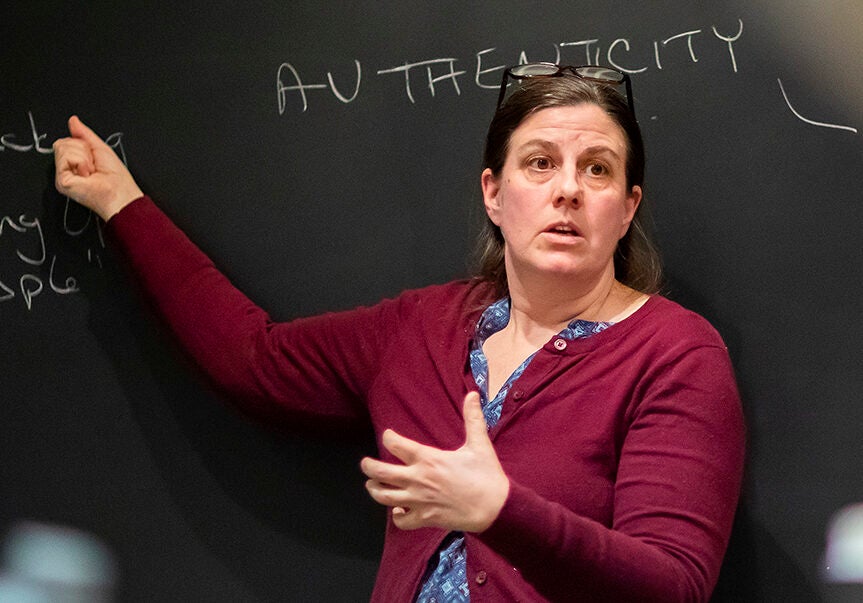
 How the Rails and the Roads Built Philadelphia: A Workshop on Transportation History and Neighborhood Change
Elizabeth Delmelle, Weitzman School of Design, Penn
Wed. Oct. 28, Wed. Nov. 4, and Wed. Nov. 18; writing session Thurs. Nov. 12
Few forces have shaped American cities as decisively as transportation. Every major shift in how people and goods moved, from streetcars to automobiles to interstate highways to freight rail, redrew the map of who could live where, which neighborhoods flourished, and which were cut off from opportunity. Transportation is one of the primary mechanisms through which segregation, inequality, and economic opportunity were built into the American city, often quite deliberately. This two-part workshop traces that history at two scales, the neighborhood and the region, using Philadelphia as an illustrative case study of these broader national forces.
 Where Bias Enters the Machine: An Introduction to Race and Gender in AI
Cristina Monzer, Annenberg School for Communications, Penn
Thurs. Oct. 29, Thurs. Nov. 5, and Thurs. Nov. 19; writing session Thurs. Nov. 12
If you ask an AI tool to generate an image of a doctor, it will likely return a man. Ask for an image of a nurse, and it returns a woman. We tend to treat these tools as neutral when they are not, in part because their output appears to reproduce common knowledge, the kind of result one would expect to see. This workshop introduces teachers to how current AI systems work and, more specifically, where bias enters: from the data a system is trained on, the tasks we ask of it, the way we write prompts, and whether we check the output it produces. We then look at what bias does once AI tools reach everyday use. It can homogenize the language and narrow the pool of images students see, as well as reinforce stereotypes about race and gender. We will draw on well-known cases and current research, including my own project on how race and gender are represented in AI-generated content on platforms such as TikTok. Teachers will discuss real examples, compare the capabilities of different AI tools, and talk about how AI is showing up in their classrooms. The sessions will be interactive and discussion-based, and each teacher will leave having developed a curriculum that helps students think more carefully about how AI tools work and how to use them, given how often they encounter these tools outside of class.
Slide presentation about the workshop: