Philadelphia high school students, on the whole, are struggling with math. This paper explores some of the reasons behind those struggles and strategies to combat them with targeted instruction in word problems and other math strategies.
Brains are weird; they work in ways that we still totally don’t understand, especially when folks are considered neuro-atypical. As much as we know about brains and learning disabilities, we still can’t pinpoint quite how to teach students with those disabilities in an optimal way for their own unique brains. Disability is a huge topic in itself, as we see named disabilities like dyslexia and dyscalculia and also general things like “math disability” and “processing disorder” and “math anxiety” and even “language impairment” that all fall into student challenges in the math classroom. Students with learning disabilities can get really frustrated, especially once they’re old enough to know that they’re not learning like their classmates and they can’t understand why. I came to this intro to cognitive science class to teach myself about how learning-disabled and other atypical brains work so I could get that information to my students in a way that makes sense for them and translates into strategies for solving problems. Turns out we still don’t know a whole lot about how these disabilities affect the human brain in a biological sense, but there’s lots of research about how to succeed despite challenges in approaching math. Philadelphia public school students take standardized math tests from 3rd grade until at least 8th grade (usually 9th, and sometimes longer if they need more than one try to pass.) There is a mass of research and studies that have been done recently on the neuroscience of learning disabilities, and specifically in the way that it affects testing anxiety and testing strategies when it comes to standardized tests. (Jackson, 2023. Galaburda, 2010. Moss, 2019. Schwartz, 2019.) Problem solving, specifically word problems, are where most students with math disabilities get tripped up. Word problems on standardized tests are a whole different ball game than the ones in class workbooks that align to particular and generally unhelpful strategies. Word problems are a different language that needs to be parsed in a way that isn’t just English and isn’t just mathematical. It’s a beast of its own that needs to be conquered with generalized strategies and a whole lot of practice. Constructing, reconstructing, and translating word problems into numbers and symbols has come to be known as the notion of mathematization (Jupri, 2483.) This is more than just reading comprehension, which is also required for mathematical word problems, but it requires knowing the connection between the meaning of the word problem and the symbols required to perform the necessary calculations to solve that problem. When a student has a math disability, it could be a disconnect with any or all of these processes. For starters, vocabulary in word problems at the middle and high school level can be challenging, and is often introduced at the middle-school level and never reviewed again (Capraro et al, 148.) This is also the point in math education when teachers need to debunk using “keywords” to solve problems, as those terms are often misleading and can have more than one meaning. Next, once a student understands the problem as written they need to determine what the data they’re being given and what information they need to find, while also ignoring extraneous details (standardized tests love those.) This means re-reading, mathematizing the words, and essentially re-telling the word problem in an order that will help reach a solution. Then comes turning those words into symbols, and putting those symbols in the correct order to achieve the required operations to determine the requested output. Only then can a student solve the problem, and that’s assuming that they can accurately execute the steps, in the correct order, to calculate the series of math symbols they’ve strung together into an equation. Lastly, one must determine if the answer that they’ve come up with after all of that is a reasonable answer to the question that was asked. An extra step of checking one’s work by using inverse operations is optional, but often required by teachers on classwork and homework assignments. This process of solving math word problems is a whole ordeal for many students, not just those with math disabilities. Throw in a processing disorder, or a struggle with working memory, and problem solving becomes an absolute nightmare for students. Having to remember all the steps, and interpret what information is important and not important is a challenge for many students (Swanson, 2015) and not having access to the resources and strategies to make those things easier is what causes students to “check out” of math, or display other signs of math anxiety (Maloney et al, 2014). When it comes to the actual strategies that benefit students with disabilities, the answers aren’t so complicated. It’s a lot of direct instruction, guided instruction, and deliberate practice, for starters. Students with math-related disabilities need explicit instruction in how to retell or otherwise represent math problems in a way that makes sense to them. They need a lot of deliberate practice, both guided and independent, to strengthen the brain pathways and mental routines of how to solve a math word problem. It turns out that repeated practice in math can produce more confidence in a student’s math skills, and more confidence can, in fact, reduce math anxiety! Math anxiety and dislike of math are often borne out of skills being taught before a student is ready or able to understand them. Say that your math experience tops out at geometry, and someone starts trying to teach you advanced calculus with no scaffolding that builds on skills you already have. Sounds frustrating, doesn’t it? Many children feel this way with math concepts being thrown at them as early as kindergarten and first grade, and when their brains aren’t quite ready to understand the ideas, they get frustrated and their little brains and bodies don’t know what to do with those big feelings of frustration. There have even been academic suggestions that as young as pre-school, students are learning math that is poorly aligned with their developmental mathematical abilities (Litkowski et al.) That’s where most math hate and math anxiety begin, and then those feelings continue throughout formal schooling. This is the root of the Reduced Competency Theory, written on by many cognitive scientists, simply hypothesizes that “prior ambivalent or negative math experiences may lead students to have adverse interpretations of these events, which would lead to later math anxiety.” (Ramirez et. al, 2018.) It has even been suggested that early childhood educators are often uncomfortable with math to the degree that it affects the way they teach and model math to their students (Bates et al, 2013). The older the student, the more difficult it becomes to reverse and counteract the years of negative feelings towards and about math. Along with a lot of reassurance that they are not, in fact, bad at math and have not been taught in a way that works for them, a lot of explicit instruction and deliberate practice is required to break the “but I’m bad at math” habit. Reading disabilities tend to be more glaring and more obvious to both parents and teachers earlier in childhood than math disabilities are, sometimes those math disabilities get ignored in favor of focusing on strategies for reading comprehension. Sometimes, difficulty with word problems is even misdiagnosed as a reading disability, and when treated as such only escalates anxiety and poor attitudes towards math. Students need to be thinking about thinking about math. Math is complicated, and going through the motions isn’t always enough for students, especially when they have a math or other processing disability. Thinking through appropriate strategies and finding strategies that make students feel sure of themselves is the key not only to beating math anxiety, but for making students into more confident problem solvers in the classroom and beyond.
The strategies I intend to use for this unit include: retelling, drawing a picture, teach-a-classmate, deliberate practice, differentiation, vocabulary review, collaborative learning, formative assessment, summative assessment and gamification. Drawing pictures is a math strategy that most folks can remember using back in kindergarten, and it still works at the upper grade levels. It’s exactly what it sounds like, drawing out what the problem is asking in order to better comprehend what information is being presented and what information is needed to find a reasonable answer. Once students get over the “that’s for babies” notion, they often find this strategy very helpful. I find it’s particularly useful with geometry. Retelling is a similar strategy to drawing a picture, but rather than using images one uses words. Students basically write the word problem without any fancy math words, in an order that makes sense and leaves out any extra information, in a way that they can better understand and process the question. Many folks without math disabilities are already doing this in their heads without even thinking about it when they read a word problem, and making it explicitly clear how that thinking process works is crucial for students with any processing disorders, math or English, to be able to decode and process word problems. Teach-a-classmate draws on both drawing pictures and retelling to have students teach one another. Once a student has learned a strategy, they teach it to a classmate by modeling it with a word problem. For some students, the most helpful thing would be to have them first “teach the teacher” so that the teacher can ensure that the student has a firm grasp on that strategy. I have found this strategy really useful to help students gain more confidence in their math skills at all levels. Deliberate practice is exactly what it sounds like; practice for the purpose of mastery and not “busy work.” Repeated practice with the same skills with variations in problem presentation and type, allowing students to master one strategy at a time, not only helps build confidence but also helps to improve working memory. Differentiation is a relatively common practice for teachers, meaning making modifications to the teaching approach, classwork, homework, and assessments given to students based on their strengths and abilities, to meet individual student needs. Most teachers are already differentiating in their classrooms without even realizing. Classrooms are never truly homogenous in terms of learning abilities. Vocabulary review is not just a simple review of vocabulary. Using this as a strategy is not only explicitly defining and explaining vocabulary used in word problems, but also using them to read, write and interpret word problems. Yes, write word problems. The best way to reinforce vocabulary is to have students use it themselves to create word problems for their classmates to solve (using any or all of the strategies they’ve learned.) Collaborative learning pairs well with vocabulary review, in that students work together in pairs or small groups to work through word problems. This allows students to both learn from their peers as well as teach their peers, which helps boost confidence in problem solving skills on the whole. Teacher facilitation may be required, depending on your specific students. I find that the more practice students have with collaborative learning, the less facilitation they need over time. Formative and summative assessments go hand in hand when teaching, otherwise we’d never know as teachers if we were making any progress with our students at all. Formative assessments are more organic in nature, like portfolios, observations, and conferences. Formative is still while the material is forming in the student minds, while the unit is being taught, to see if any changes in instruction are needed to make teaching more effective. Summative assessments are pretty much tests and quizzes, summing up what the students have learned over the course of the unit (or piece of unit being assessed in a quiz.) Gamification is a favorite among my students, which isn’t very surprising since they’re all addicted to their phones. Gamification doesn’t have to be using phones or computers, but I most often incorporate learning and assessments into digital games because that’s what gets the attention of my students. There are a ton of resources for this on the internet, often websites like Kahoot!, Blookit, and Quizizz allow students to compete against each other individually or on teams while learning and giving the teacher data on what has been mastered and what needs to be retaught. This is not to say that using Monopoly or The Game Of Life to teach money skills doesn’t work, or using playing cards or dice for students to learn or review basic math facts isn’t effective, but for the students I work with the digital games are far more effective at capturing and holding their attention.
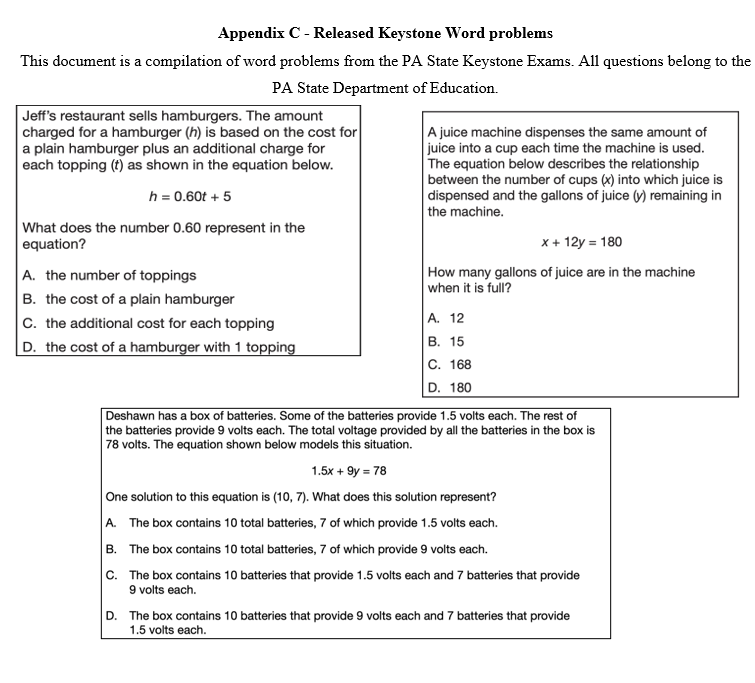
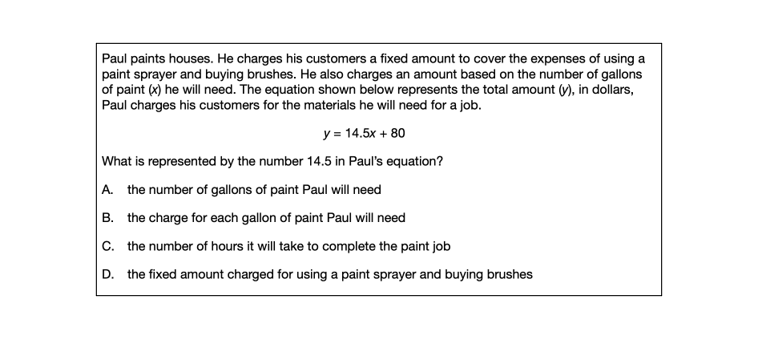
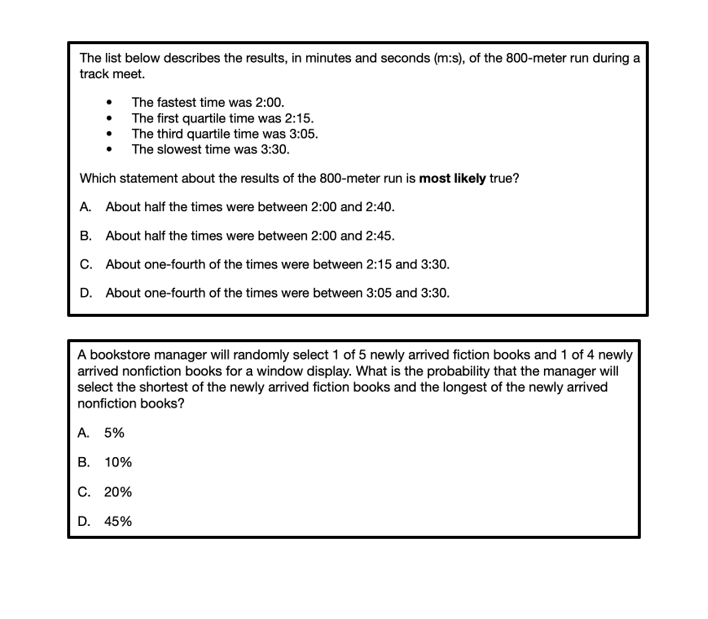
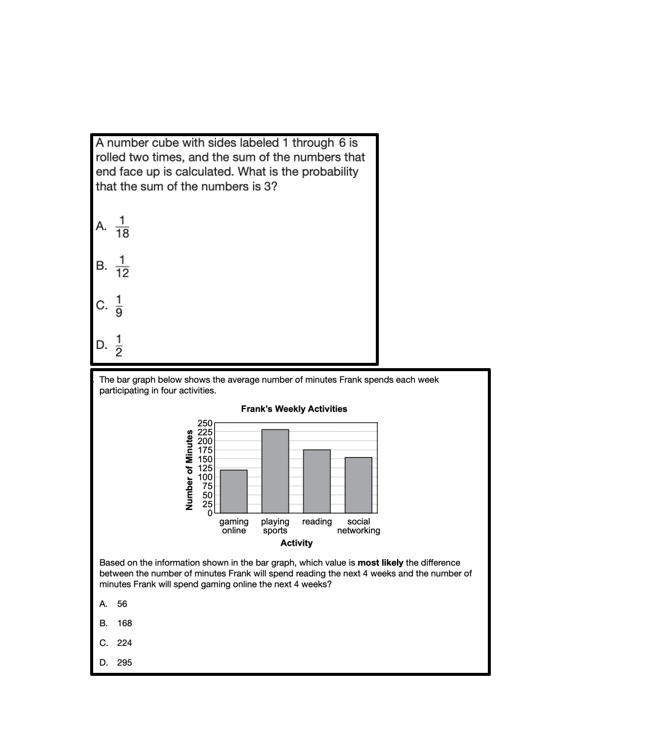
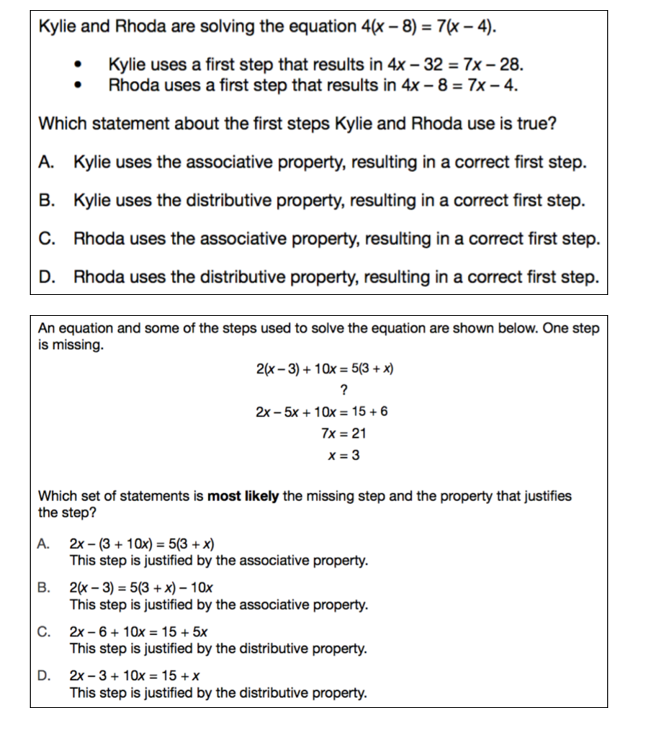
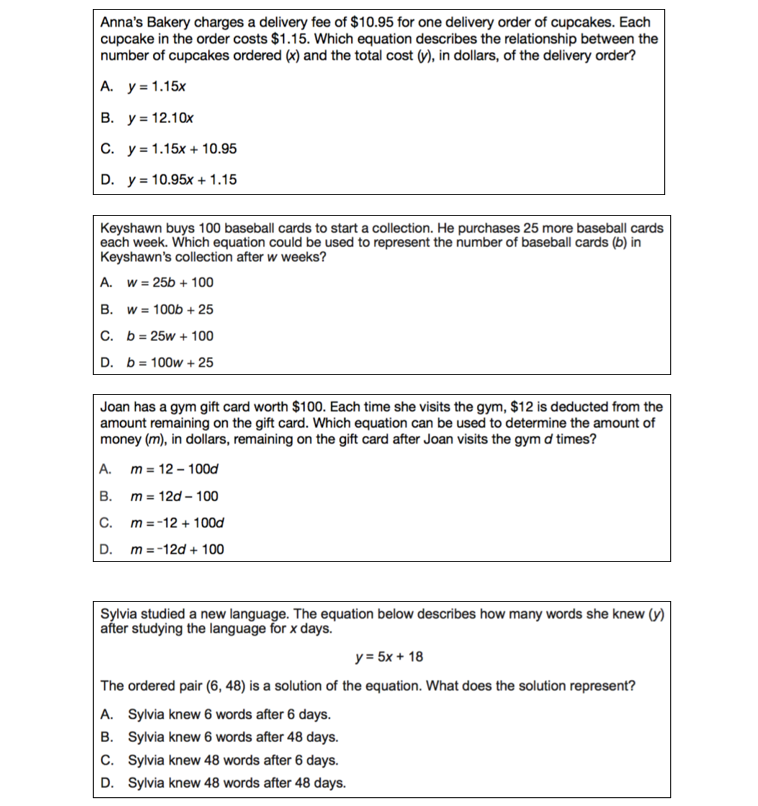
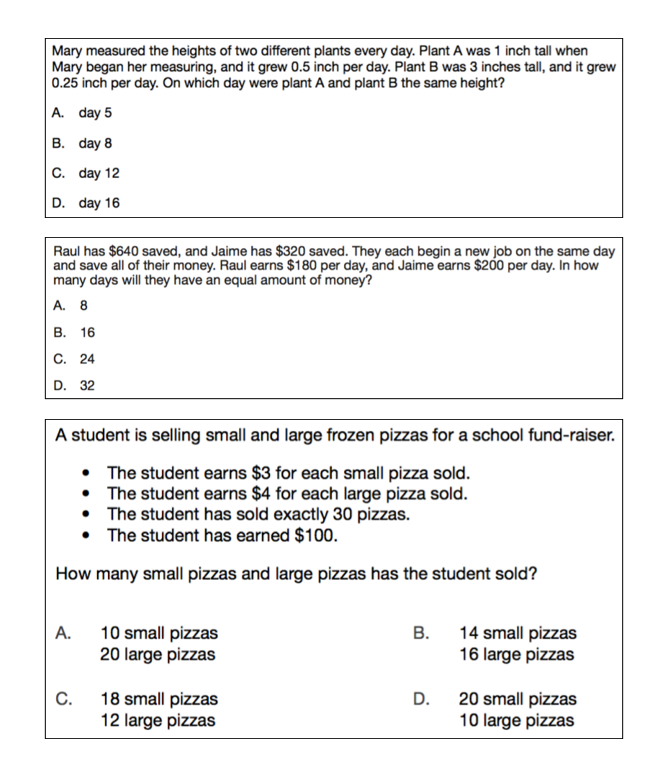
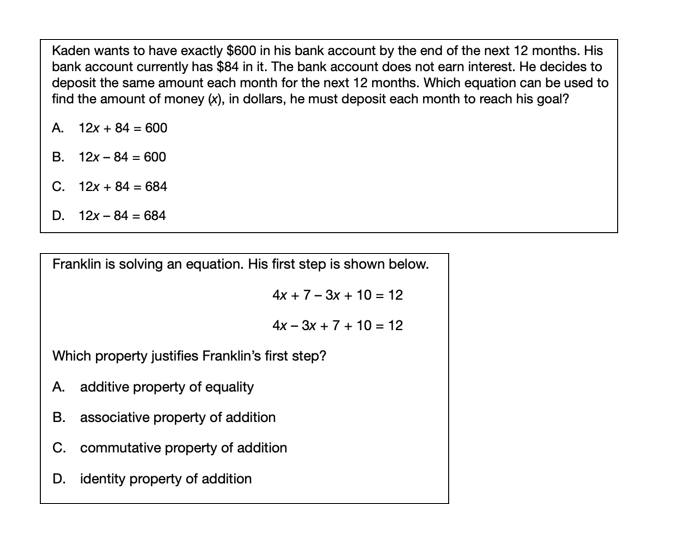
Lesson 1: Introduction to Math Anxiety Time: 1 45-minute class period Objectives: Students will assess their own attitudes towards math and explore practices to reduce some of those anxieties. Instructional Strategies: Formative assessment, differentiation, gamification, collaborative learning. Materials: Attitudes towards math survey, pens/pencils New Vocabulary: Math Anxiety Lesson Introduction: Open the unit by asking students about past math experiences and how they feel about math. Have them close their eyes, and rate different math experiences by holding up 0-5 fingers as answers. Direct Instruction: Have students independently fill out the Math Attitudes survey, have them share the answer to the last question on the board (in the form of a poll, have each possible answer on the board and have students place a tally mark at the one they chose.) Group Work: Ask students to find a partner they are comfortable with (small groups might also work, depending on your classroom) to talk through some of their answers. Closure: Have students hand in their surveys, allow students to express anything not asked on the paper. Lesson 2: Bring in some released exam items from previous keystone exams, and have students rate them on a scale of easiest to most difficult. Start by having students break down the problems they perceive to be the easiest, using the above strategies. Time: 2 45-minute class periods Objectives: Students will be able to express what specifically about math word problems they find confusing or difficult, or make them feel anxious. Instructional Strategies: retelling, teach-a-classmate, draw it out, deliberate practice, vocabulary review, collaborative learning Materials: Set of 5-10 Keystone-level word problems, graphic organizer, pencils, post-it notes or index cards New Vocabulary: Mathematizing Lesson Introduction: Have students take 5 minutes to write down what they think are the steps to solving a word problem. Students can work individually or in pairs, at the discretion of the teacher. Direct Instruction: Demo with students breaking down word problems to be able to answer: (1) I know what this question is asking me to find (2) I know what information I have (3) I know what information I need to find (4) I know how to use what I have to find an answer (5) I can use all of that to compute an answer, and (6) I know how to judge if my answer is appropriate. Group Work: In groups of 2-4, have students work through a set of 5-10 Keystone word problems using the above questions, and then attempting to solve the problem. If they have time at the end of the second class period, have them rate the problems 1-10 as to which was easiest to hardest to solve. Closure: Have students write on a post-it or index card about 1 thing they learned during this lesson, collect on their way out the door. Lesson 3: Using data collected about problems students are mostly overwhelmed by, use a similar problem as an example and model breaking it down into small chunks. Model with more examples asking for student input, before releasing students to work in small groups on deciphering these problems on their own. Time: 1 45-minute class period Objectives: Students will be able to take a calm and rational approach to math word problems. Instructional Strategies: Retelling, drawing a picture, teach-a-classmate, deliberate practice, differentiation, vocabulary review, collaborative learning Materials: fidget tools for students, worksheets with math problems, blank paper for notes New Vocabulary: fidget Lesson Introduction: Students will explore different fidgets, placed around the room like a “Fidget Fair.” Students will be invited to take a fidget that they feel might help them relax a bit. Direct Instruction: Using data from the previous class, model through the 2-3 most difficult problems for the class. Use multiple strategies. When students exhibit confidence, release small groups to work together on new problems until all students are comfortable. Group Work: Have students work in groups using any problem-solving strategies they choose to continue working through previously-released Keystone problems. Closure: As students finish working with their groups, check in and have them note any struggles, mathematical or otherwise. Collect these notes as students leave. Lesson 4: Have students practice on their own, with graphic organizers/guided notes on how to break down the problems as needed, and provide resources on anxiety management/panic prevention. Time: 2 45-minute class periods. Objectives: Students will be able to break down and solve word problems independently using supports and strategies learned. Instructional Strategies: Differentiation, retelling, deliberate practice, collaborative learning, formative assessment Materials: fidget tools for students, worksheets with math problems, blank paper for notes Lesson Introduction: Open the lesson with 5 minutes of deep breathing or guided meditation. Remind students they can use these techniques at any time. Direct Instruction: Review strategies for work problem solving, have visual aids/graphic organizers for students who need them. Model one problem, and release students to work on their own as able. Group Work: Have students work in groups using any problem-solving strategies they choose to work through problems, and review any anxiety management strategies as they arise. Check in with students to assess as needed. Closure: Have students label the problem they found easiest and the problem they found most difficult. Have them turn this in at the end of class. Lesson 5: Students write their own word problems for peers to solve, with parameters set by the teacher. Students must write their problem down on one paper, and then solve and check on a separate paper to make sure that their answer makes sense with the problem and is ultimately correct. Students can switch papers and solve each other’s word problems, or the teacher can collect and copy all the problems for more practice. Typing might help this process move faster. Time: 2-3 45-minute class periods Objectives: Students will write their own word problems, solve those problems, and solve problems written by their classmates. Instructional Strategies: Differentiation, teach-a-classmate, collaborative learning, formative assessment Materials: paper, pencils, fidget tools, graphic organizers Lesson Introduction: Quick (5-7 minute) online game on managing stress in the classroom, via sites like Kahoot! Blookit, Quizziz, etc. Direct Instruction: Teacher will model writing a word problem, taking steps to show solving that problem, and making sure that students are ready to do the same. Release students as they are able to work on their own, continue to model until all students are ready. Group Work: Students will work independently to write their own word problems, solve them, and then trade among their group to solve each other’s word problems. Students should show all their work when solving their own and other’s problems. Closure: Students will turn in their word problems, their own answers, and the answers their classmates gave to their problems. Lesson 6: Practice mini-test: Students attempt a mini-test of several released test items they have not seen in class before, with all the anxiety-reducing techniques and reminders of strategies available to them. Students will be regularly reminded to use the strategies they have to solve the problems in front of them. Time: 1 45-minute class period Objectives: Students will use their new-learned anxiety management and math problem solving skills to complete a grade level set of standardized test questions. Instructional Strategies: Summative assessment, formative assessment, retelling, draw-it-out Materials: worksheets, pencils, fidgets, calming music, headphones Lesson Introduction: review calming techniques with students, have graphic organizers and retelling/breakdown questions easily available for students who want guides Independent Practice: Students will work through an appropriate number of problems they can complete in 30 minutes (at the discretion of the teacher, as per the students’ abilities) while practicing techniques to break down the problems and relax their bodies and minds. Closure: Check in with students at the end of the formative assessment to see how they feel. Continue to monitor over the next several units, and re-administer the attitudes survey when it feels appropriate to reassess students attitudes towards math and word problems.
Bibliography: Ashcraft, M. H., & Ridley, K. S. (2005). Math anxiety and its cognitive consequences: A tutorial review. The handbook of mathematical cognition, 315-327 Bates, A. B., Latham, N. I., & Kim, J. A. (2013). Do I Have to Teach Math? Early Childhood Pre-Service Teachers’ Fears of Teaching Mathematics. Issues in the undergraduate mathematics preparation of school teachers, 5. Capraro, M. M., & Joffrion, H. (2006). Algebraic equations: Can middle-school students meaningfully translate from words to mathematical symbols?. Reading psychology, 27(2-3), 147-164. Dotan, D., Zviran-Ginat, S. Elementary Math in Elementary School: the effect of interference on learning the multiplication table. Cogn. Research 7, 101 (2022). Galaburda, A. M. (2010). Neuroscience, education, and learning disabilities. Human Neuroplasticity and Education, 27, 151. Hong, E., Sas, M., & Sas, J. C. (2006). Test-taking strategies of high and low mathematics achievers. The Journal of Educational Research, 99(3), 144-155. Jackson, J. (2023). The Inequity of Standardized Testing for Students with Disabilities. Jawad, Lina Fouad. “Mathematical connection skills and their relationship with productive thinking among secondary school students.” Periodicals of Engineering and Natural Sciences (PEN) 10.1 (2022): 421-430. Jordan, Nancy C., Laurie Blanteno Hanich, and Heather Z. Uberti. “Mathematical thinking and learning difficulties.” The development of arithmetic concepts and skills. Routledge, 2013. 361-384. Jupri, A., & Drijvers, P. (2016). Student difficulties in mathematizing word problems in algebra. Eurasia Journal of Mathematics, Science and Technology Education, 12(9), 2481-2502. Lambert, R. (2015). Constructing and Resisting Disability in Mathematics Classrooms: A Case Study Exploring the Impact of Different Pedagogies. Educational Studies in Mathematics, 89(1), 1–18. Lee, K., Ng, S. F., & Bull, R. (2018). Learning and solving algebra word problems: The roles of relational skills, arithmetic, and executive functioning. Developmental psychology, 54(9), 1758. Litkowski, E. C., Duncan, R. J., Logan, J. A., & Purpura, D. J. (2020). When do preschoolers learn specific mathematics skills? Mapping the development of early numeracy knowledge. Journal of experimental child psychology, 195, 104846. Lutfiyya, Lutfi A. “Mathematical thinking of high school students in Nebraska.” International Journal of Mathematical Education in Science and Technology 29.1 (1998): 55-64. Maccini, Paula, et al. “Accessing the general education math curriculum for secondary students with high incidence disabilities.” Focus on Exceptional Children 40.8 (2008): 1-32. Maloney, E. A., Sattizahn, J. R., & Beilock, S. L. (2014). Anxiety and cognition. Wiley Interdisciplinary Reviews: Cognitive Science, 5(4), 403-411. Montague, Marjorie, Craig Enders, and Samantha Dietz. “Effects of cognitive strategy instruction on math problem solving of middle school students with learning disabilities.” Learning Disability Quarterly 34.4 (2011): 262-272. Montague, M., Krawec, J., Enders, C., & Dietz, S. (2014). The effects of cognitive strategy instruction on math problem solving of middle-school students of varying ability. Journal of Educational Psychology, 106(2), 469. Moss, H. (2019). Extra Time Is A Virtue: How Standardized Testing Accommodations After College Throw Students with Disabilities Under the Bus. Alb. Gov’t L. Rev., 13, 201. Murray, Eileen Christina. Implementing higher-order thinking in middle school mathematics classrooms. Diss. University of Georgia, 2011. Ramirez, G., Shaw, S. T., & Maloney, E. A. (2018). Math anxiety: Past research, promising interventions, and a new interpretation framework. Educational psychologist, 53(3), 145-164 Salvatore, S., White, C. & Podowitz-Thomas, S. “Not a cookie cutter situation”: how neurodivergent students experience group work in their STEM courses. IJ STEM Ed 11, 47 (2024). https://doi.org/10.1186/s40594-024-00508-0 Schwartz, A. E., Hopkins, B. G., & Stiefel, L. (2021). The effects of special education on the academic performance of students with learning disabilities. Journal of Policy Analysis and Management, 40(2), 480-520. Setiana, Dafid Slamet, and Riawan Yudi Purwoko. “The Application of Mathematics Learning Model to Stimulate Mathematical Critical Thinking Skills of Senior High School Students.” European Journal of Educational Research 10.1 (2021): 509-523. Shin, M., Ok, M.W., Choo, S. et al. A content analysis of research on technology use for teaching mathematics to students with disabilities: word networks and topic modeling. IJ STEM Ed 10, 23 (2023). https://doi.org/10.1186/s40594-023-00414-x Slavit, David. “The role of operation sense in transitions from arithmetic to algebraic thought.” Educational studies in mathematics 37.3 (1998): 251-274. Steele, M. M. (2010). High school students with learning disabilities: Mathematics instruction, study skills, and high stakes tests. American Secondary Education, 21-27. Swanson, HL (2015) Cognitive strategy interventions improve word problem solving and working memory in children with math disabilities. Front. Psychol. 6:1099 Zhu, N. (2015). Cognitive strategy instruction for mathematical word problem-solving of students with mathematics disabilities in China. International Journal of Disability, Development and Education, 62(6), 608-627.
CC.2.1.HS.F.2 Apply properties of rational and irrational numbers to solve real world or mathematical problems. CC.2.1.HS.F.3 Apply quantitative reasoning to choose and interpret units and scales in formulas, graphs, and data displays. CC.2.1.HS.F.4 Use units as a way to understand problems and to guide the solution of multi-step problems. CC.2.1.HS.F.5 Choose a level of accuracy appropriate to limitations on measurement when reporting quantities. CC.2.1.HS.F.6 Extend the knowledge of arithmetic operations and apply to complex numbers. CC.2.1.HS.F.7 Apply concepts of complex numbers in polynomial identities and quadratic equations to solve problems CC.2.2.HS.D.1 Interpret the structure of expressions to represent a quantity in terms of its context. CC.2.2.HS.D.2 Write expressions in equivalent forms to solve problems. CC.2.2.HS.D.9 Use reasoning to solve equations and justify the solution method. CC.2.2.HS.C.1 Use the concept and notation of functions to interpret and apply them in terms of their context. CC.2.3.HS.A.14 Apply geometric concepts to model and solve real world problems. CC.2.4.HS.B.6 Use the concepts of independence and conditional probability to interpret data. Appendix B – Attitudes Towards Math Survey Attitudes Towards Math Name: ________________________________ Date: ___________ Love it Like it No strong feelings Don’t like it Hate it Smart Nervous Afraid Powerful Sick Stupid Really Good Okay So-so Not Good Awful Really Good Okay So-so Not Good Awful Absolutely Probably I’m not sure Probably Not Not at All All the time Often Sometimes Rarely Never ____________________________________________________________________________________________________________________________________________________________________________________ ____________________________________________________________________________________________________________________________________________________________________________________ 😃 😱 🥵 😴 🫠 🤢 🤓 🥴 Appendix C – Released Keystone Word problems This document is a compilation of word problems from the PA State Keystone Exams. All questions belong to the PA State Department of Education.